“Let me know Your ways that I may know You”. Moses had already led the children of Israel out of Egypt and through the Red Sea. He had met God on Mount Sinai and received the Ten Commandments. And now he was in the midst of a long hard journey to the land of milk and honey. It was here that God’s anger burned against the Israelites. After He had delivered them from their bondage in Egypt, they continued in their obstinate ways. When God tells him of His intentions of destroying the nation, Moses intercedes in a most interesting encounter in Exodus 33. It is indeed the amazing climax of an amazing story. He wants to know God’s ways in order that he may know God.
The study of the life of Moses is really a study of the character of God. Seeing God’s character throughout the events that unfold in the life of Moses helps us to know who God really is. James Montgomery Boice says that ‘knowing who God is and what God is like is far more important for us than seeing God physically’. God told Moses that no one can see Him and live. He was revealing to Moses that it isn’t so much a vision of Him that mattered. What mattered is knowing who He is and what He is about. We can know God through His written Word.
The world becomes a a strange, mad, painful place, and life in it a disappointing and unpleasant business, for those who do not know God. Disregard the study of God, and you sentence yourself to stumble and blunder through life blindfolded, as it were, with no sense of direction and no understanding of what surrounds you.1
In this study, we will learn about God’s ways so that we can learn about God Himself. We will see how the character of God shaped the character of Moses. We will see what makes a great leader. We will learn about prayer. We will learn about mercy and justice. We will learn of obedience, of humility, of teachability and of courage. We will learn of trust and of faith.
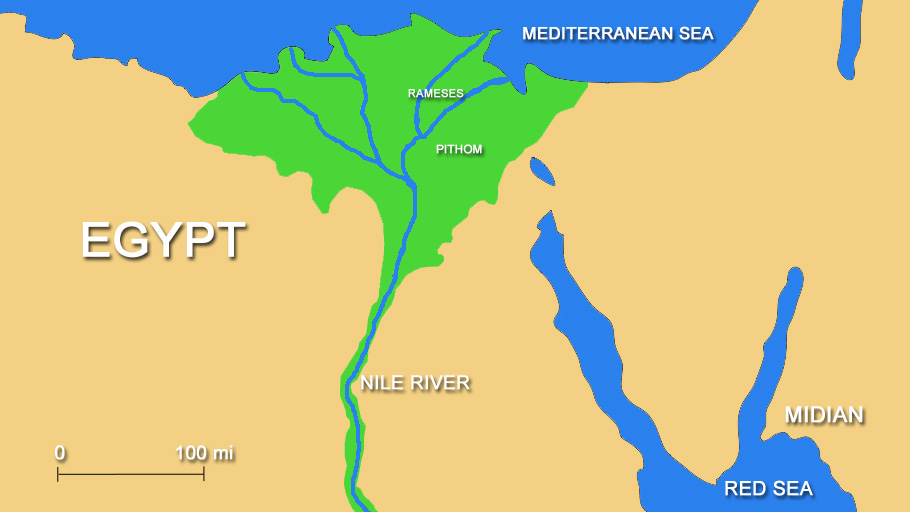
Background on Egypt
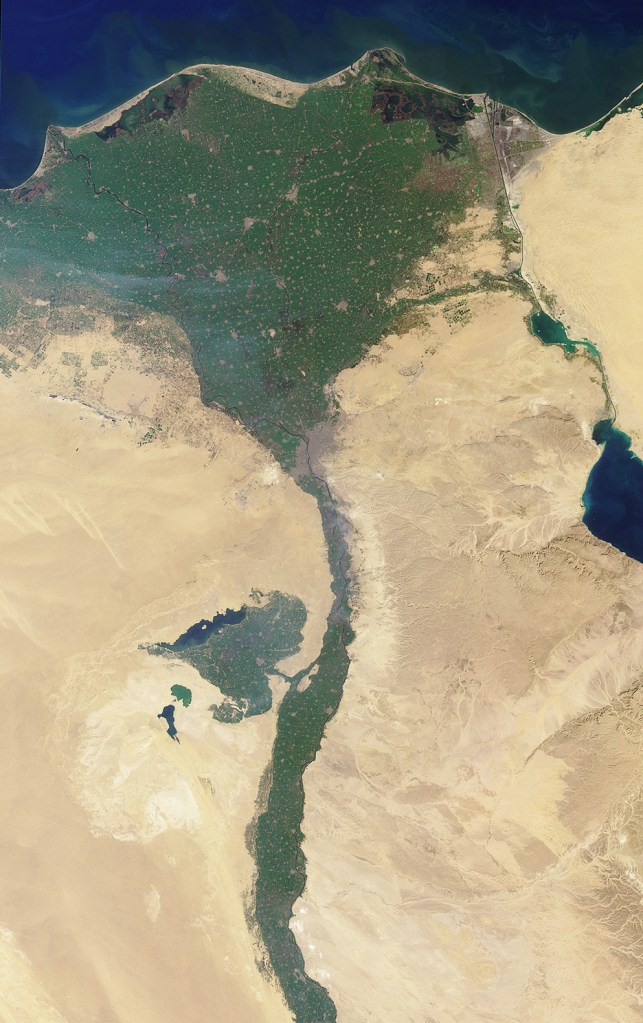
- Current population centers around the Nile River and Delta. The Delta is 150 miles of coast line, east to west and 100 miles long, north to south. 99% of the population occupies about 5% of the land.
- The Nile River continues to be the center of life (economically, socially, religiously).
- Rich in natural resources and wealth of produce grown in the river valley.
- Fish, waterfowl, crocodiles and pythons in the Nile.
- Cattle, lions, leopards, foxes, coyotes in the Nile area.
- The use of papyrus – paper, sandals, baskets, etc.
Where did the Book of Exodus Come From?
God ‘breathed out’ scripture to men who would record his Word. He used the personalities, intellect, vocabulary, experiences and various writing styles of His chosen human authors to convey what He wanted to communicate (see 2 Timothy 3:16-17).
The making of the Bible was NOT left to merely human skills of communication: The Holy Spirit himself carried the process to completion (see 1 Peter 1:20-21).
God has preserved His Word through all of history. In the case of the Pentateuch (the first five books of the Bible), Moses wrote down all the words of the Lord (see Exodus 24:4). This was a critical component in the compilation of this part of the Bible! The spoken word being made physical and permanent – set in stone, so to speak!
Date of Exodus?
Scholars are divided, but the biblical data points to about 1445BC. The temple was begun in 966 or 965 BC (Fourth year of Solomon’s reign). The Exodus happened 480 years before that. 965+480=1445. See 1 Kings 6:1.
Egypt in the Bible
Egypt is mentioned over 700 times in the Old Testament and at least 25 times in the New Testament. In Exodus, we get a bad impression of Egypt because of how badly the children of Israel were treated. But during different times in history, Egypt was a place of refuge and safety.
Read John 2. Herod wanted to kill Jesus. What was the plan in keeping the Child from being destroyed?
Read Acts 7:11-15. What catastrophic event happened and what was Egypt’s role in dealing with it? God used Joseph to preserve many people alive (Genesis 50:20).
But a king arose in Egypt who did not know Joseph (Exodus 1:8). It’s important that we know who Joseph was because it gives us context as we head into a study of the book of Exodus. Read Genesis 37:1-50:26, taking note of God’s sovereign hand as Joseph interacts with his brothers.
The Events of Exodus Appear Often in Other Places in the Bible:
- Joshua 24:4-7 – Joshua reminds the people of Israel what God has done for them in his farewell address.
- Psalm 105 – a brief summary of Israel’s history and God’s involvement
- Acts 7:17-44 – Steven reviews Israel’s history in his defense before the high priests
- Hebrews 11:22-29 – Moses appears in this passage as an example of what true faith is
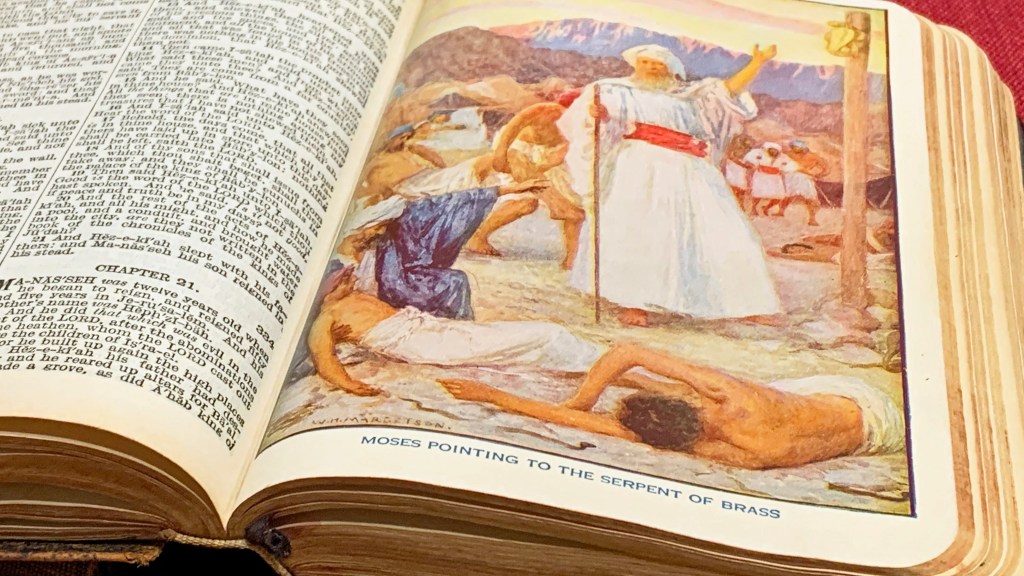
Moses
Name means ‘to draw out’. Moshe. May be a shortened form of the word Meseh, meaning ‘one born of the Nile’. This form of the word was used in many common Egyptian names like Hopmoseh or Ermoseh. Which could explain why he later refused to be called the son of Pharaoh’s daughter (Heb. 11:24). He may have shortened his name to Moses, rejecting being identified with one of the Egyptian gods.
What does the Bible say about Moses? Hebrews 11 has seven verses on Moses!
Moses was a great man of faith. He made choices to obey God. He failed sometimes, but despite his weaknesses, the more he encountered God, the more he wanted to KNOW God.
The question that looms large is this: what will you do with this accumulated knowledge of God? What are your intentions as you begin to know God and His ways?
Footnotes
- J.I. Packer, Knowing God, InterVarsity Press, Downers Grove, IL, 1973, page 19.



 Establish my footsteps in Your Word ~ Psalm 119:133