Discouragement and despair are part of the human condition. They may lie dormant in our hearts but are often awakened by difficult and unpleasant circumstances that interrupt our lives and overwhelm us.
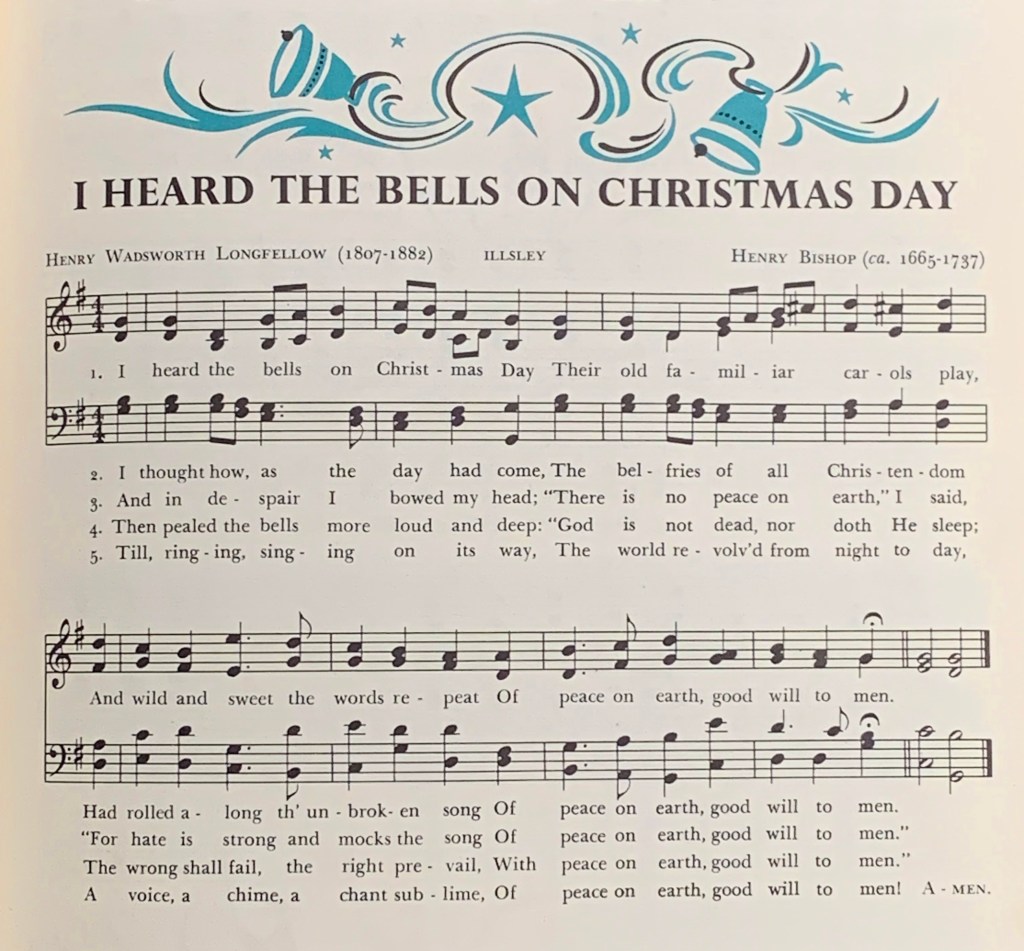
Henry Wadsworth Longfellow, the American writer famously known as the author of Paul Revere’s Ride, was no stranger to tragedy. His wife Mary, whom he married in 1831, passed away in 1835, after suffering from the complications of a miscarriage. He was remarried to Fannie Elizabeth Appleton in 1843 and enjoyed a wonderful life, raising six children. In 1861, Henry’s happiness was abruptly ended when Fannie was severely burned in a fire. From either sealing envelopes with candle wax or from a lit match that had dropped to the floor, her dress caught fire and she died from her injuries the next day. Henry’s burns from trying to save his dear bride were so severe, he missed her funeral. He stopped shaving due to the injuries and grew a beard to cover the scars on his face.
Plunging into the abyss of despair, Henry withdrew from writing for a few years and even thought he may end up in an insane asylum. In his grief he expressed that he was “inwardly bleeding to death”.
By now, the Civil War was raging. Henry’s son had enlisted in the military and was injured on the battlefield by a bullet that entered his body near his spine. Young Charley Longfellow was at risk of being paralyzed. Henry’s concern for his son was only multiplied by his inability to do anything about it. The grief of the tragic loss of two wives, the pain of dealing with his son’s severe injury and the death of his friend Nathanial Hawthorne in 1864 were weights too heavy for a human soul to bear.
While Charley was recovering, and facing another Christmas as a widower, Henry heard the bells. Whether it was the sound of literal bells pealing in the distance, or something ringing in his spirit, he wrote the following in his journal: “I looked out of the window at night and saw all the trees covered and bent down with snow, and thought of Richter’s “New Years Eve of an Unhappy Man,” and knew that I should not “wake and find it a dream.”” (The Life of Henry Wadsworth Longfellow, Samuel Longfellow).
And so despite his circumstances in a world filled with tragedy and hate, the church bells became to him a reminder of the living God, the bright Light that extinguishes the darkness of despair. We are never without hope because God is not dead, nor doth He sleep.



 Establish my footsteps in Your Word ~ Psalm 119:133