The photos appearing here are owned by me. They have been registered on a photo cataloging website for proof of ownership purposes. Images from this site cannot be used for any reason without written permission. High resolutions images are available upon request for $20 each. Make a request by using the contact form.
Andy Warhol Bridge
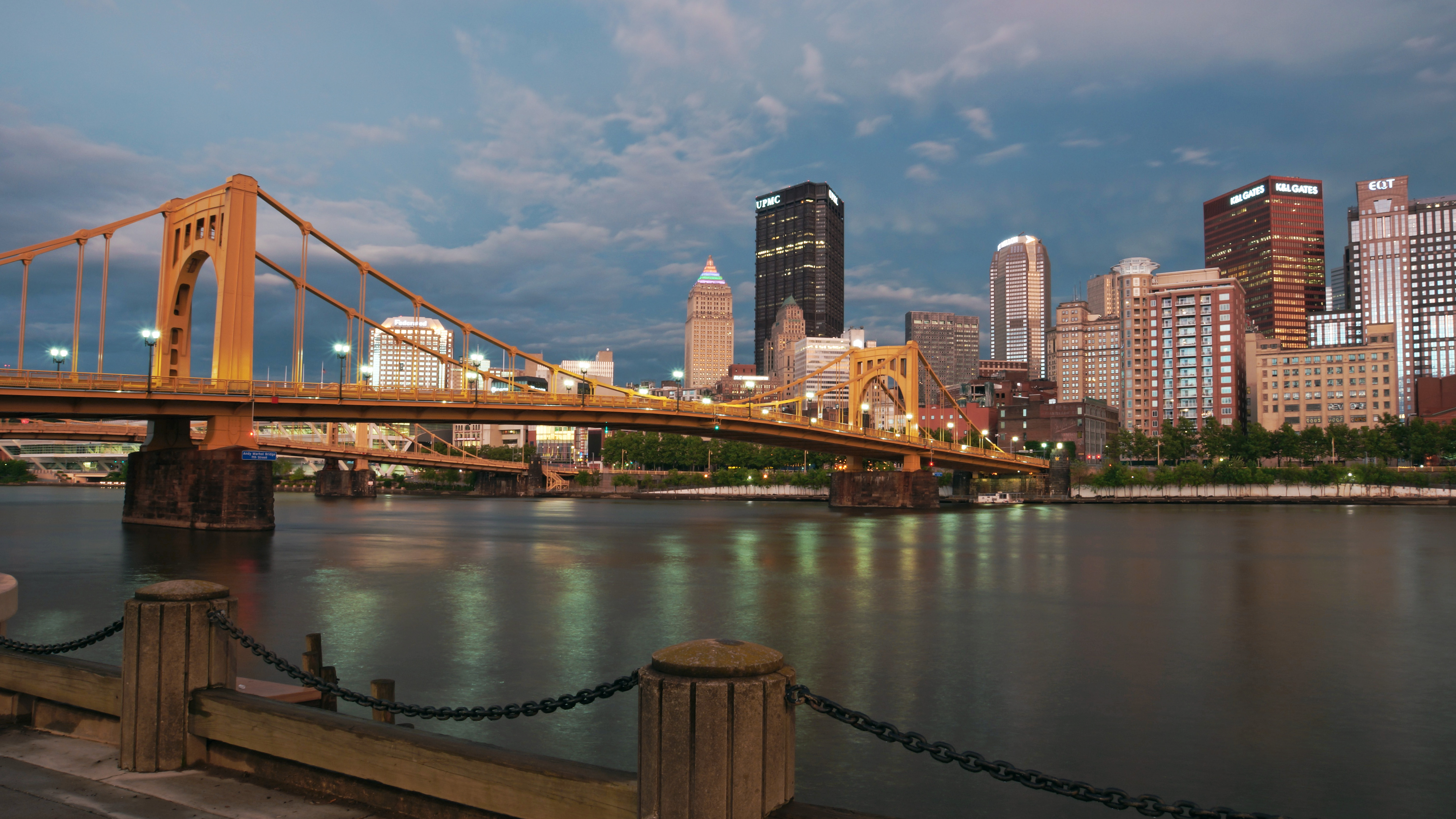
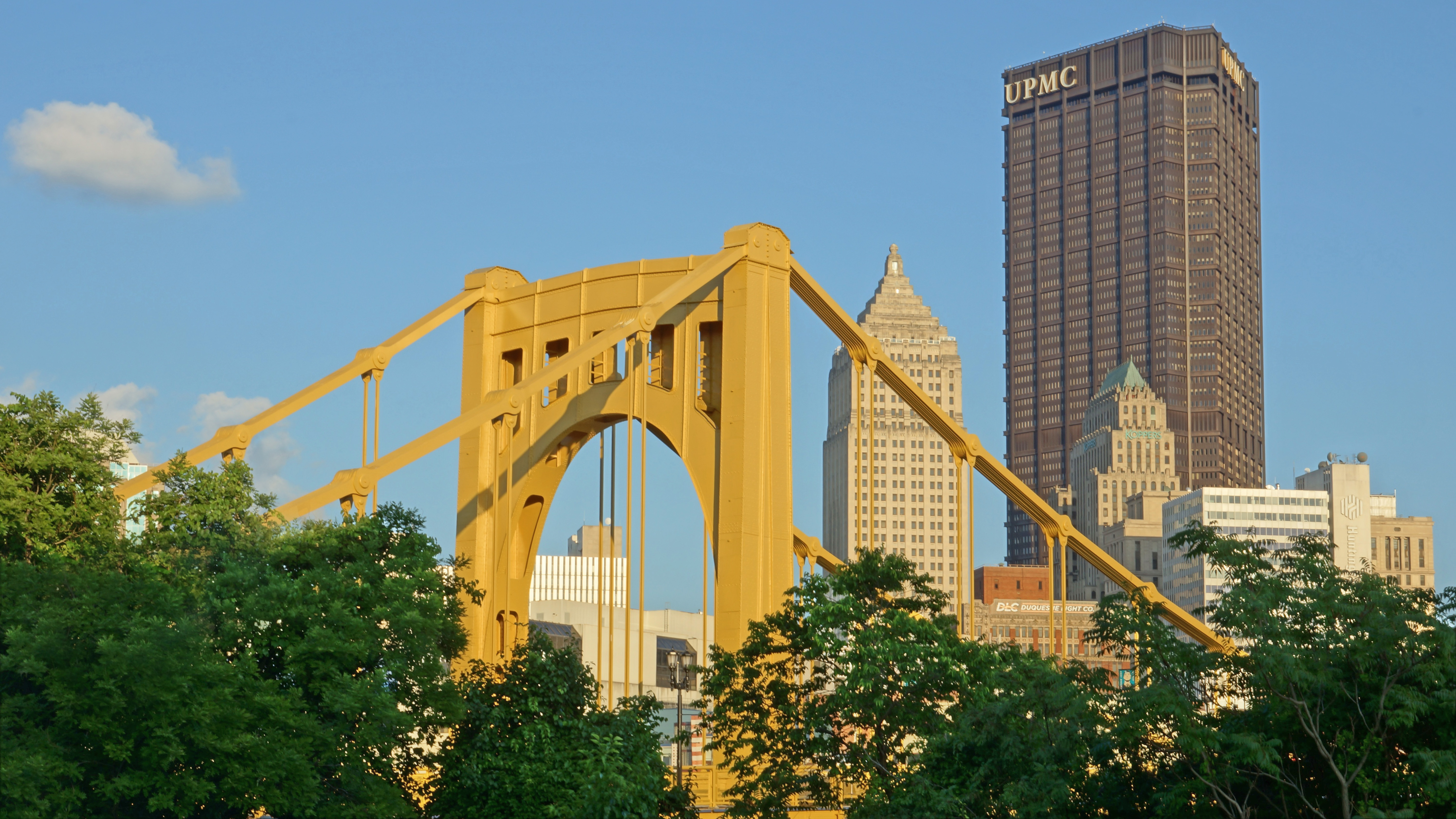
The Seventh Street bridge was renamed to the Andy Warhol Bridge on March 18, 2005. Andy ‘Warhola’ was born in Pittsburgh in 1928 (two years after the bridge was opened in 1926). Warhol was a leading artist and known for such things as designing the Campbell’s Soup label and popularizing the phrase “15-minutes of fame”.
He was an influential artist that gained recognition among people of many walks of life including celebrities, many of whom he painted portraits. He also designed cover art for popular musicians including the ‘Sticky Fingers’ album by the Rolling Stones.
The renaming of the bridge to honor Warhol coincided with the tenth annversary of the opening of the Andy Warhol Museum on the North Shore of Pittsburgh. It is located on Sandusky Street, right off the north end of the bridge
Roberto Clemente Bridge
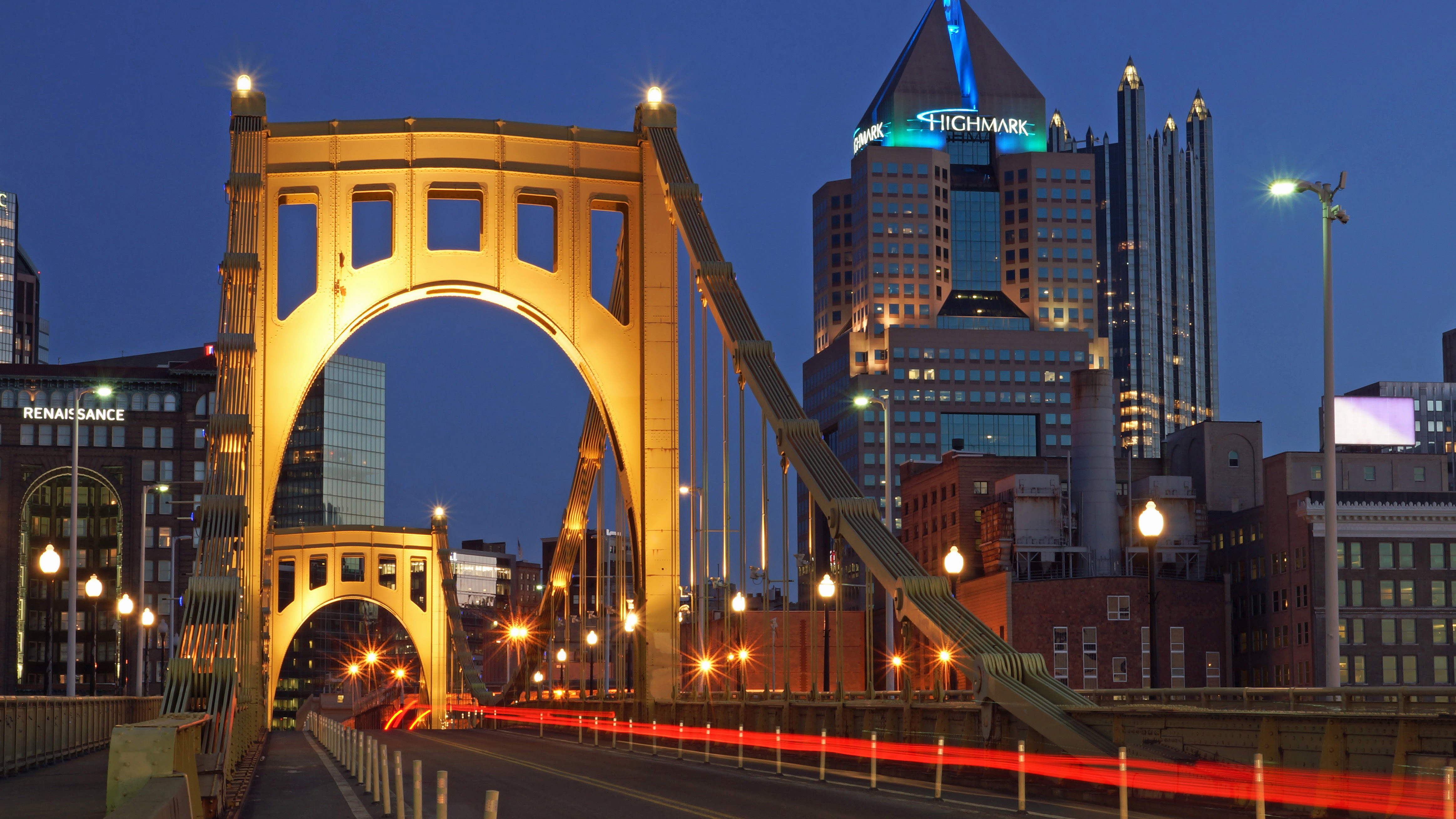
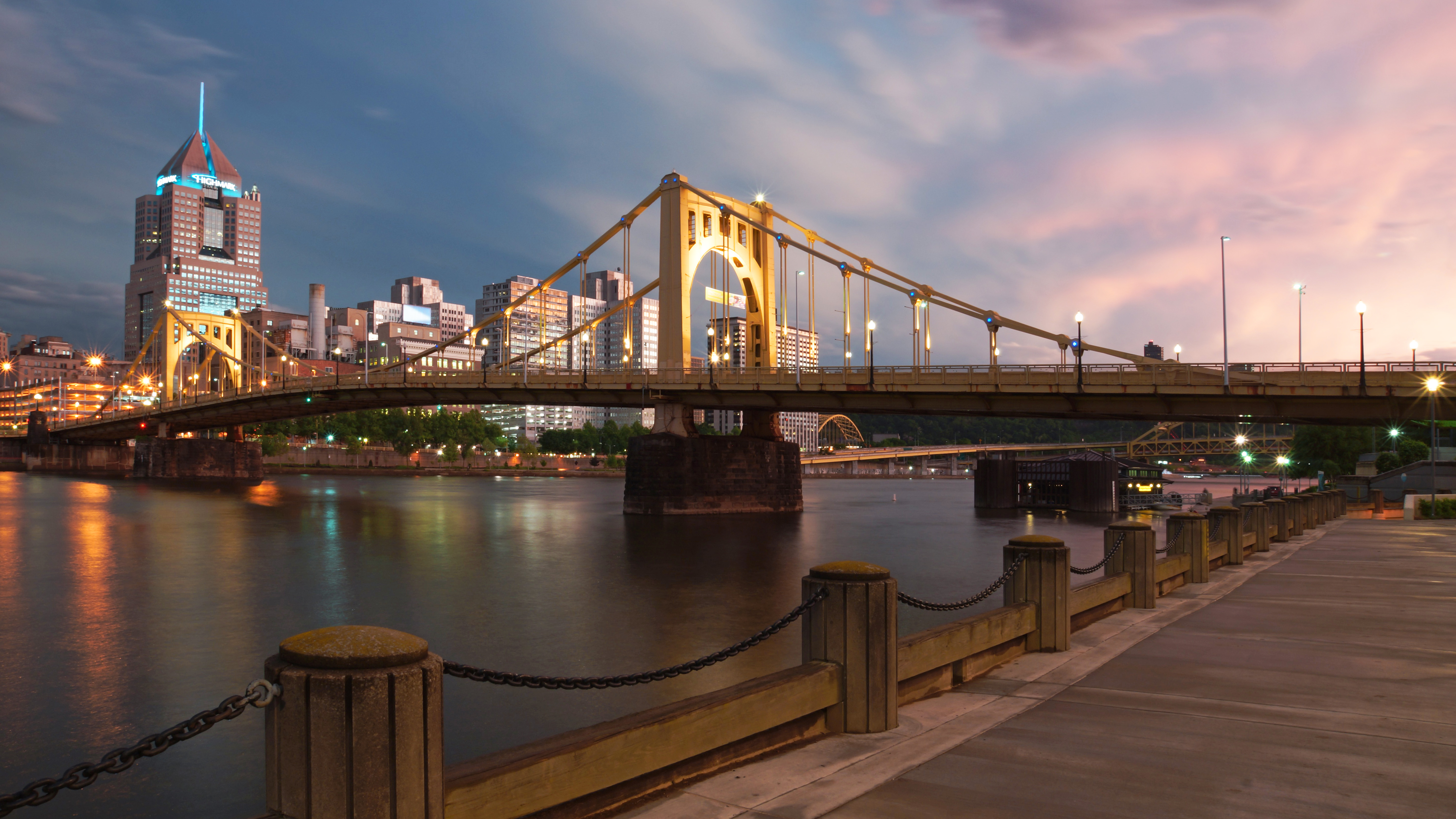
The Roberto Clemente bridge is one of the ‘Three Sisters’ bridges in Pittsburgh that spans the Allegheny River. It’s a beautiful structure that is part of the defining motif of the city’s skyline. The construction of this bridge was completed in September of 1928. It is also known as the Sixth Street Bridge, but it is not the only bridge to have existed at this site.
The original crossing was built around 1819. The St. Claire Bridge boasted of much more than simply transporting vehicles and trolley cars. It often was social gathering place for pedestrians in a prominade of sorts. It may have had the same festival feeling as when the bridge is closed for a Pirate game today.
The second Sixth Street bridge was built in 1859 by John Roebling who was famous for designing suspension bridges. His innovation in wire rope technology was instrumental in the construction of the Brooklyn Bridge in New York. Incidentally, Roebling and his brother founded the small town of Saxonburg about 30 miles north of Pittsburgh.
By the end of the 1800’s a third bridge was built, but it didn’t last long due to a number of factors. The United States War department had imposed certain height and clearance specifications that local governments had to comply with. Designs for new bridges were submitted and ‘The Most Beautiful Bridge in America’ opened for traffic and pedestrians in 1928.
The Sixth Street Bridge was renamed to the Clemente Bridge on August 6, 1998, a move that many Pittsburghers saw as a weak compromise since they wanted the new baseball park to be named after Clemente.
Roberto Clemente was the beloved right fielder for the Pittsburgh Pirates from 1955 to 1972. Voted posthumously into the Baseball Hall of Fame in 1973, Roberto helped the Buccos win two dramatic World Series Championships (1960 and 1971) and finished his career with exactly 3000 hits.
Not only was he a star on the field and in the clubhouse, he was also known for being a humanitarian. Throughout his amazing baseball career, he was committed to charity work in Latin America throughout the off-season. The heart of every true Pittsburgher was broken upon hearing the devastating news that Roberto Clemente died in an airplane crash on December 31, 1972 while on his way to participate in earthquake relief in Nicaragua.
Roberto Clemente never got to play at PNC Park, but it is a fitting tribute to his contribution to society naming a bridge after him, especially one that leads the fans in the city to this beautiful baseball stadium.
Fort Duquesne Bridge
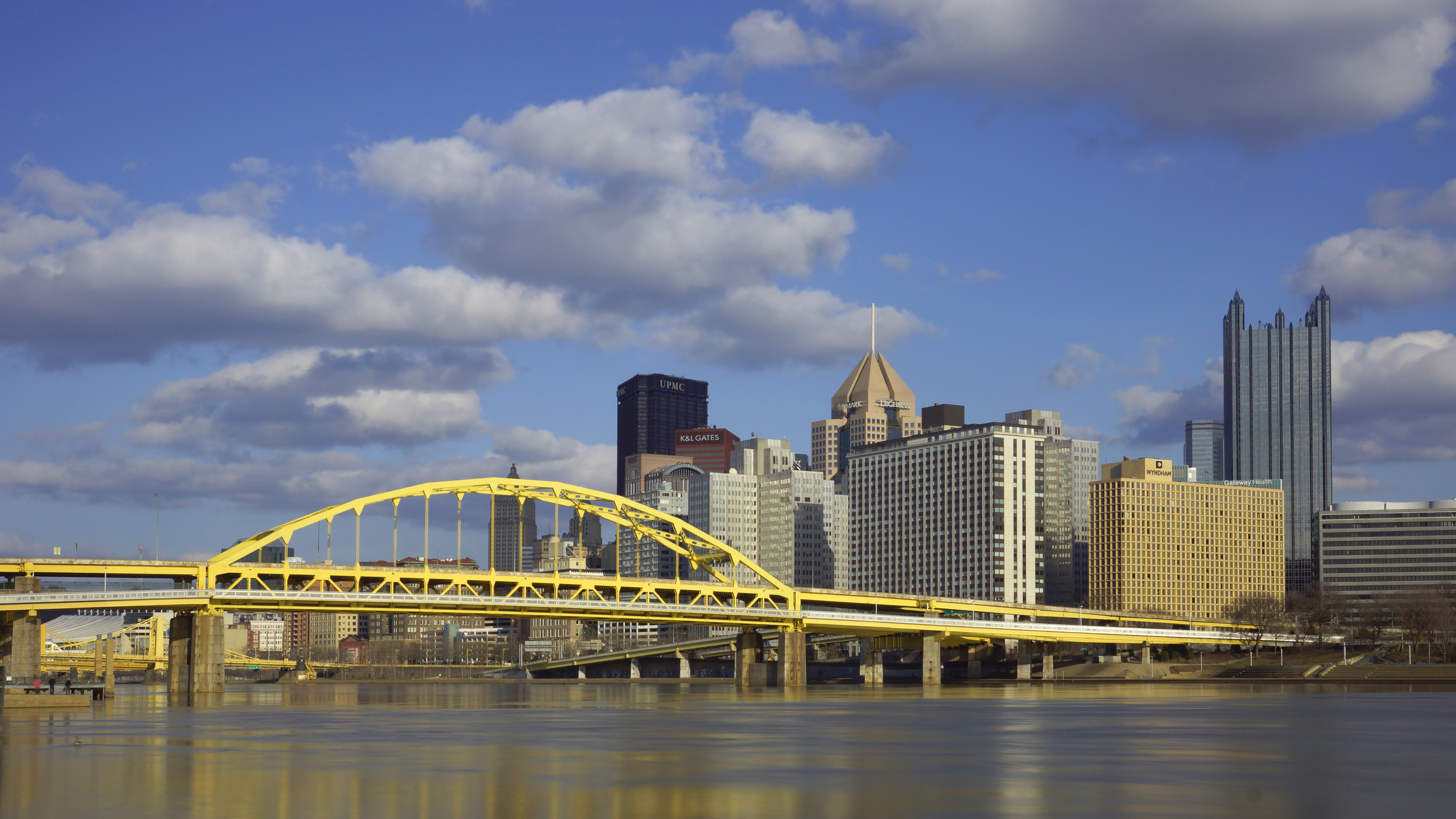
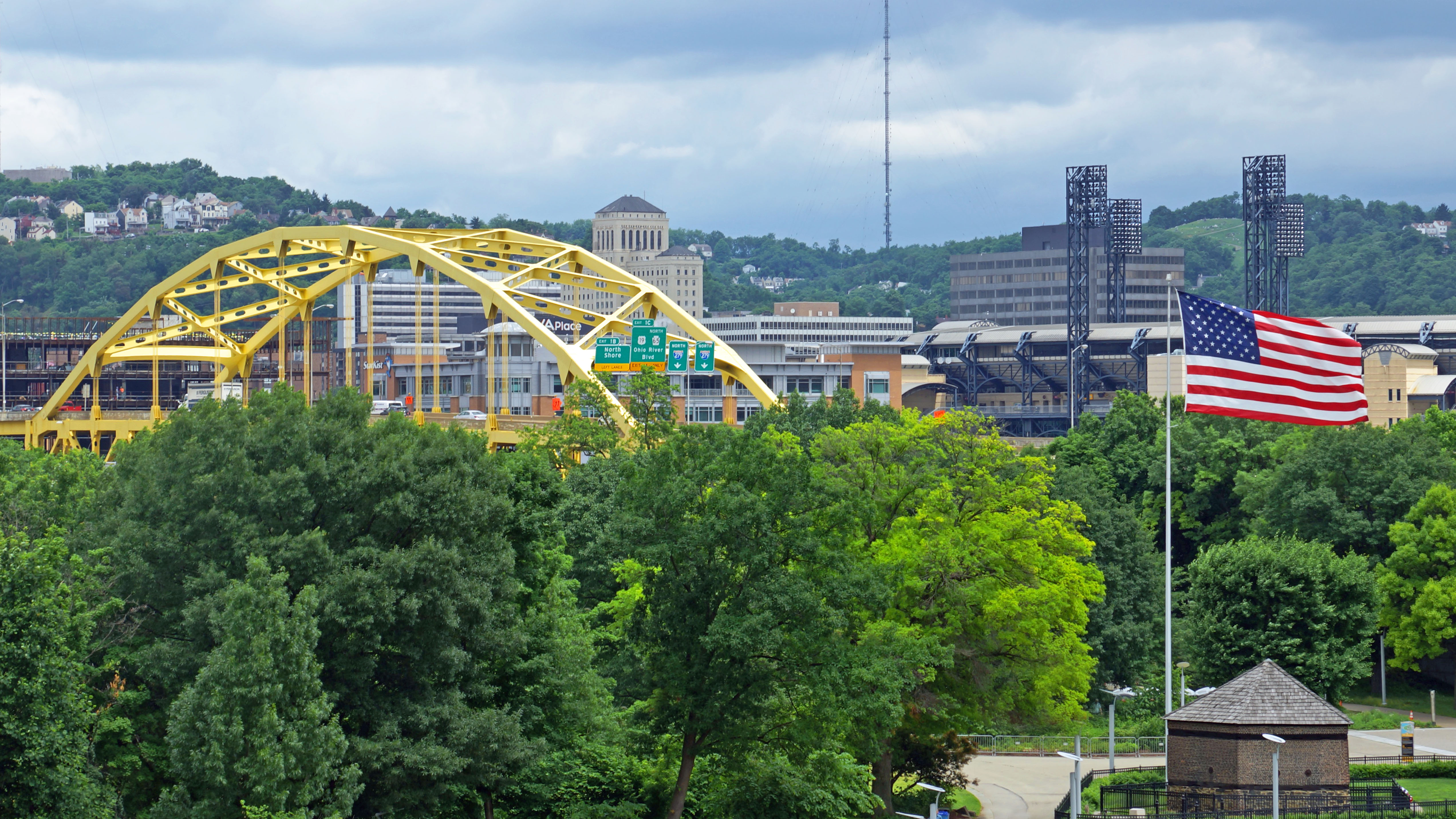
The Fort Duquesne Bridge is a double-deck, steel bowstring arch bridge that spans the Allegheny River from the North Shore near Heinz Field, crossing to the Point and then joining with its near-twin, the Fort Pitt Bridge. Construction on the main part of the bridge was completed in 1963. However, due to uncertainty of where the approach ramps would be located and bureaucratic red tape, the bridge could not be entirely finished for many more years. Consequently, the unfinished structure became known as “The Bridge to Nowhere” because the north end of the bridge appeared to just be hanging in mid-air for so long.
As with almost every site in Pittsburgh, there is always a story to be told. In December of 1964, a local college student decided to race through the barricades with his car, hurtling over the unfinished end and landing upside down on the riverbank below. The shaken-up driver climbed out of the wreckage and was taken to the nearest hospital, Allegheny General. He was released shortly thereafter, once the medical personnel had determined he had no further injuries.
Upon completion of the North Shore ramps, the Fort Duquesne Bridge opened in 1969, allowing traffic to proceed westbound toward PA Route 65. In 1986, the ramps toward the northeast were completed, allowing traffic to flow from the bridge toward Interstate 279. On the west side of the bridge is a wide sidewalk providing safe passage from the Point to the attractions near Heinz Field and PNC Park.
Fort Pitt Bridge
Rachel Carson Bridge
Smithfield Street Bridge
West End Bridge

 Establish my footsteps in Your Word ~ Psalm 119:133