The narratives in Genesis are more than just informative history. The Apostle Paul wrote in the New Testament, “For whatever was written in earlier times was written for our instruction, so that through perseverance and the encouragement of Scripture we might have hope” (Romans 15:4 NASB). The homicide of Abel, at the hands of his brother Cain, is one such instance of an historical account that we must learn from. But what sort of life application – or hope – could we possibly gain from history’s first murder?!
Observations from the Text
Emerging from the passage we learn that Abel was a keeper of the flocks. He brought the firstlings of his flock to God as an offering, which God accepted.
Cain, on the other hand, was a tiller of the ground. He brought an offering to God from the fruit of the ground, but God had no regard for Cain’s offering. As a result, Cain’s countenance fell. God asked Cain three questions in a seeming attempt to get Cain to a point of acceptance: 1). Why are you angry? 2). Why has your countenance fallen? 3). Will your countenance not be lifted up if you do well?
Cain was not interested! In a jealous rage he murdered his brother Abel. When God confronted him about his wicked act, Cain, in a callous display of indifference, said he had no idea where Abel was. God then cursed him and forced him out of the land to be a wanderer. And no longer would the ground yield its strength to Cain.
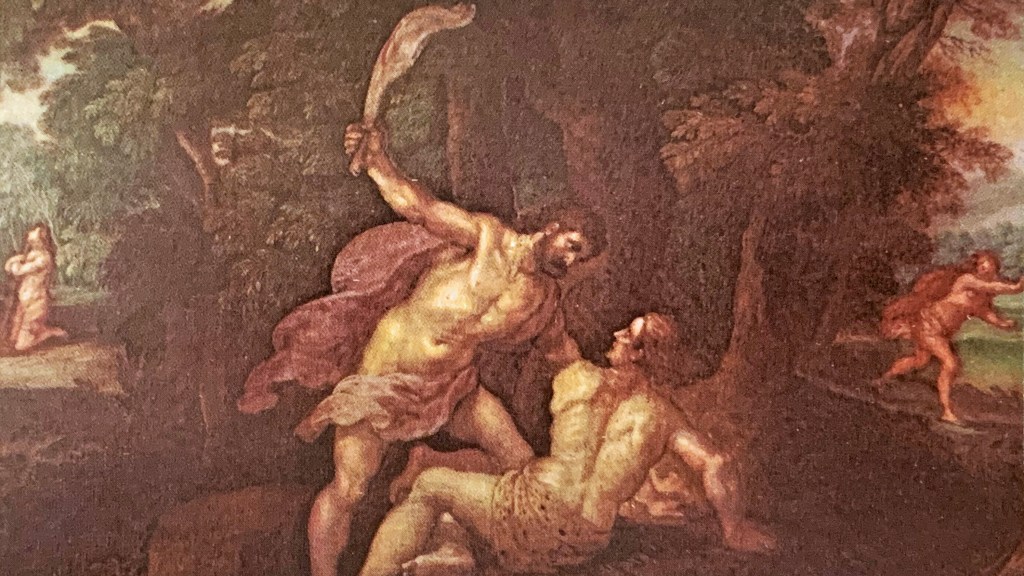
An Age Old Question
Why was Cain’s offering rejected? Maybe God was looking for a specific kind of offering? Maybe Abel’s was accepted because it involved the shedding of blood, while Cain’s was not good enough because it was from the ground. The answers to these questions are often debated and many theologians make good cases to support their various positions. But what do the scriptures say? Here are some conclusions we can draw by looking at the whole of Scripture:
1). The Bible says that “sin” offerings require a blood sacrifice (Leviticus 4:2-3; 20).
2). However, Genesis never says what kind of an offering that Cain and his brother Abel were making. Was it a “sin” offering, or was it another kind of offering? We don’t know. There are context clues in the prior chapter with the animal skins used to cover Adam and Eve, but it’s possible that other kinds of offerings were done at that time.
3). The book of Leviticus tells us that God accepted grain offerings. These were often an expression of devotion and gratitude toward God for his goodness.
4). Hebrews 11:6 says that, ‘without faith it is impossible to please God’. Conversely, true faith IS pleasing to God.
5). Hebrews 11:4 also says that ‘Abel offered a better sacrifice than Cain’ and ‘through faith, though he is dead, he still speaks’.
6). Abel made his offering in faith.
7). Cain’s offering was NOT in faith. If he did offer it by faith, it would have been accepted by God, if Hebrews 11:6 is true.
8). 1 John 3:12 says explicitly that Cain’s deeds were evil. Murdering Abel did not make Cain evil. He already was evil by virtue of the deeds he was doing, including possibly his offerings. This passage says exactly why he murdered Abel: because his deeds were evil and Abel’s were righteous. “His deeds were evil” implies a lifestyle of works devoid of any godliness. The word for ‘slew’ in this passage is not the normal word for murder. It actually means ‘butcher’. A butcher uses a knife. Did Cain slit the throat of his brother in a cold-blooded, premeditated act, mocking how Abel had to slay his blood sacrifice? What was going through Cain’s mind? “Oh, You like blood for an offering? Then I will give you blood…”, as he brutally executed his brother. Horrifically evil! Cain didn’t just have a bad attitude. He was a jealous, petulant, hateful, blood-thirsty, homicidal maniac… a willing, murderous tool in the hands of Satan. Cain was this evil person in his heart long before he put Abel to death.
9). It seems the reason for God’s rejecting of Cain’s offering is two sides of the same coin: his bankruptcy of faith and his lifestyle of wickedly evil deeds.
Abel Still Speaks
When Hebrews 11:4 says that “Abel still speaks”, what is it that Abel is saying? What do we hear when we listen to Abel’s voice? Abel’s offering was accepted by God and so he knew exactly what God was looking for. God would not have hidden his requirements from neither Abel nor Cain. When we examine the rest of scripture, it becomes clear that pleasing God was not just a matter of the offering itself. We start to hear Abel speaking when we look at several passages on “offerings” and “sacrifice”, and we would do well to ask ourselves what Abel possibly asked himself:
God, What Exactly Do You Require of Me?
- 1 Samuel 15:22 – Obedience
- Psalm 50:7-15 – Thanksgiving and obedience
- Psalm 51:14-17 – A broken and contrite heart
- Psalm 69:30-31 – Praise in song and thanksgiving
- Jeremiah 7:23 – Obedience
- Hosea 6:6 – Loyalty
- Matthew 9:13 – Compassion
- Matthew 12:7 – Compassion
- Mark 12:28-33 – Love God, love people
Abel’s life speaks to what exactly faith consists of. Abel is telling us that our faith requires obedience! He’s telling us that our faith requires thanksgiving. And a contrite heart. And loyalty. Love and compassion! These are characteristics of the heart! Although Abel was the first human to die, his testimony lives on: it is the condition of the heart, not our oxen or sheep or goats… or money or obligatory service or church attendance or any other outward symbols!



 Establish my footsteps in Your Word ~ Psalm 119:133