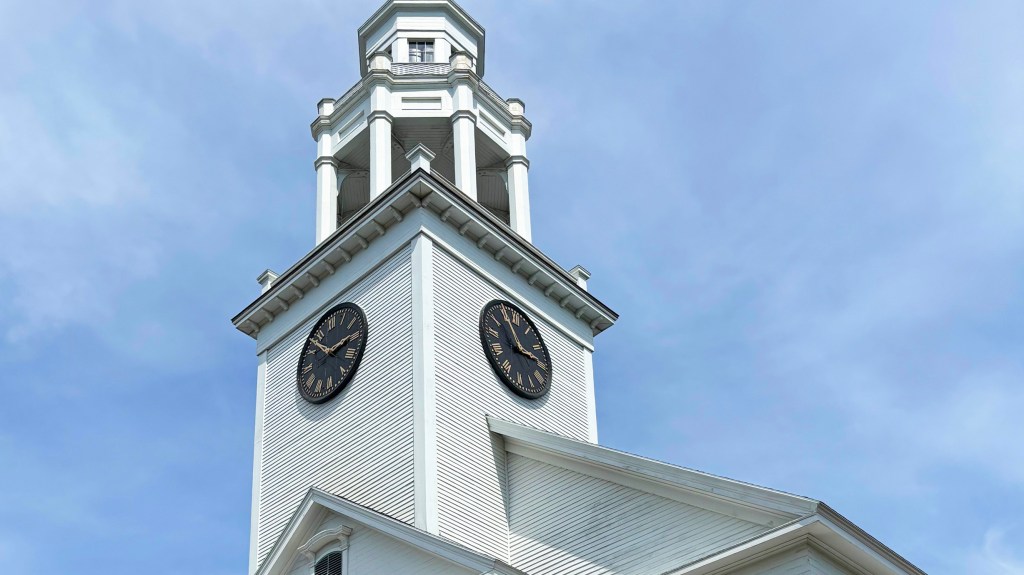
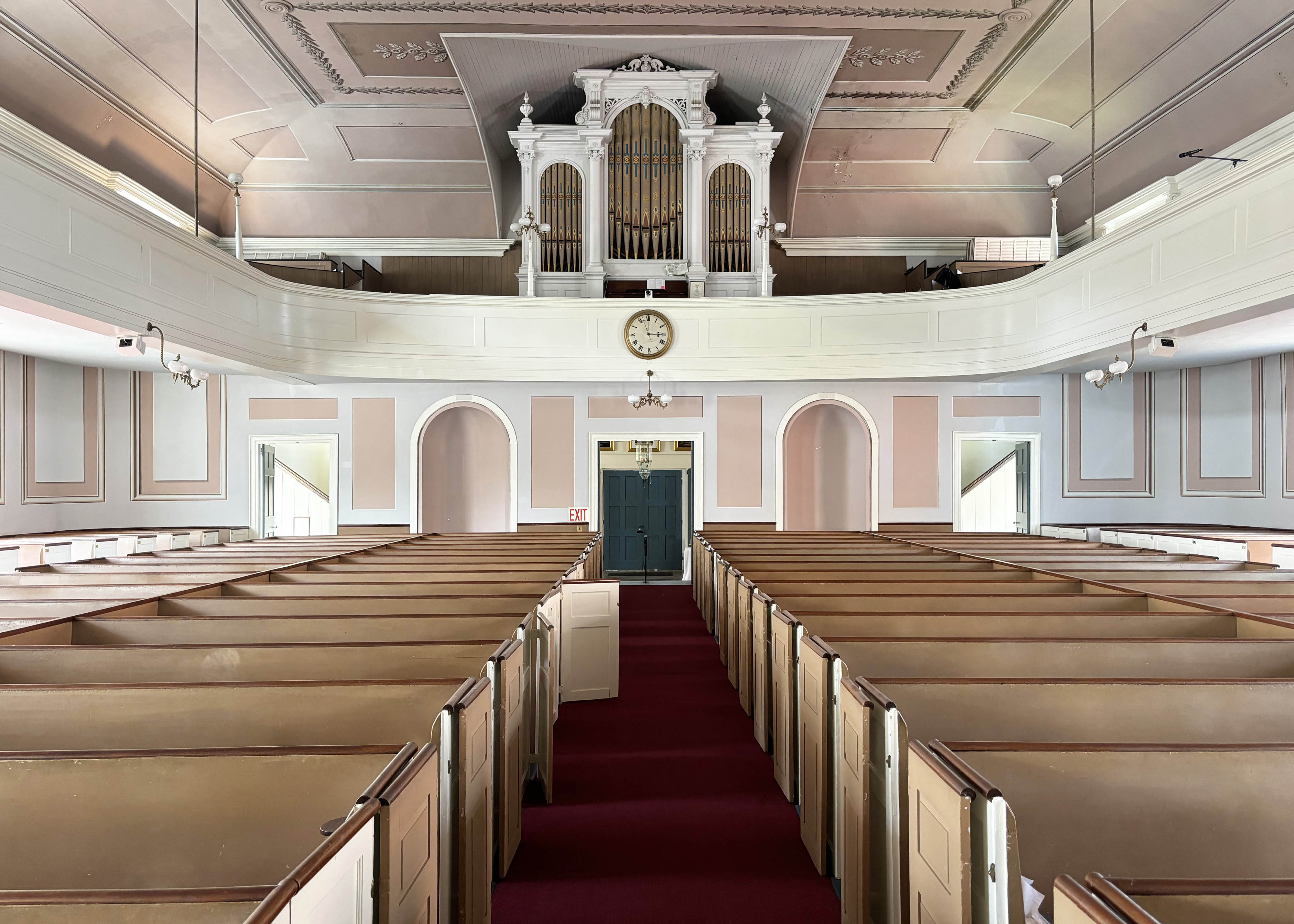
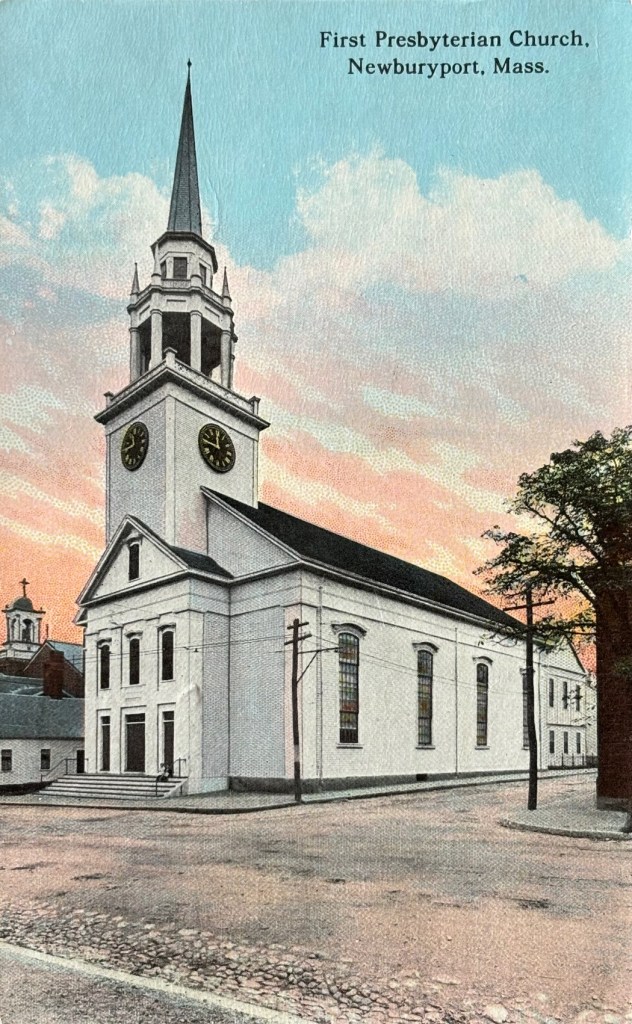
On a beautiful and hot June day in the summer of 2024, my family and I descended the old wooden steps into the cool basement of an old church in Massachusetts to see an uncommon piece of American and church history. The famous evangelist from America’s Great Awakening era, George Whitefield, not only preached in this very church, but his remains are buried beneath the pulpit of the Old South Presbyterian Church in Newburyport.
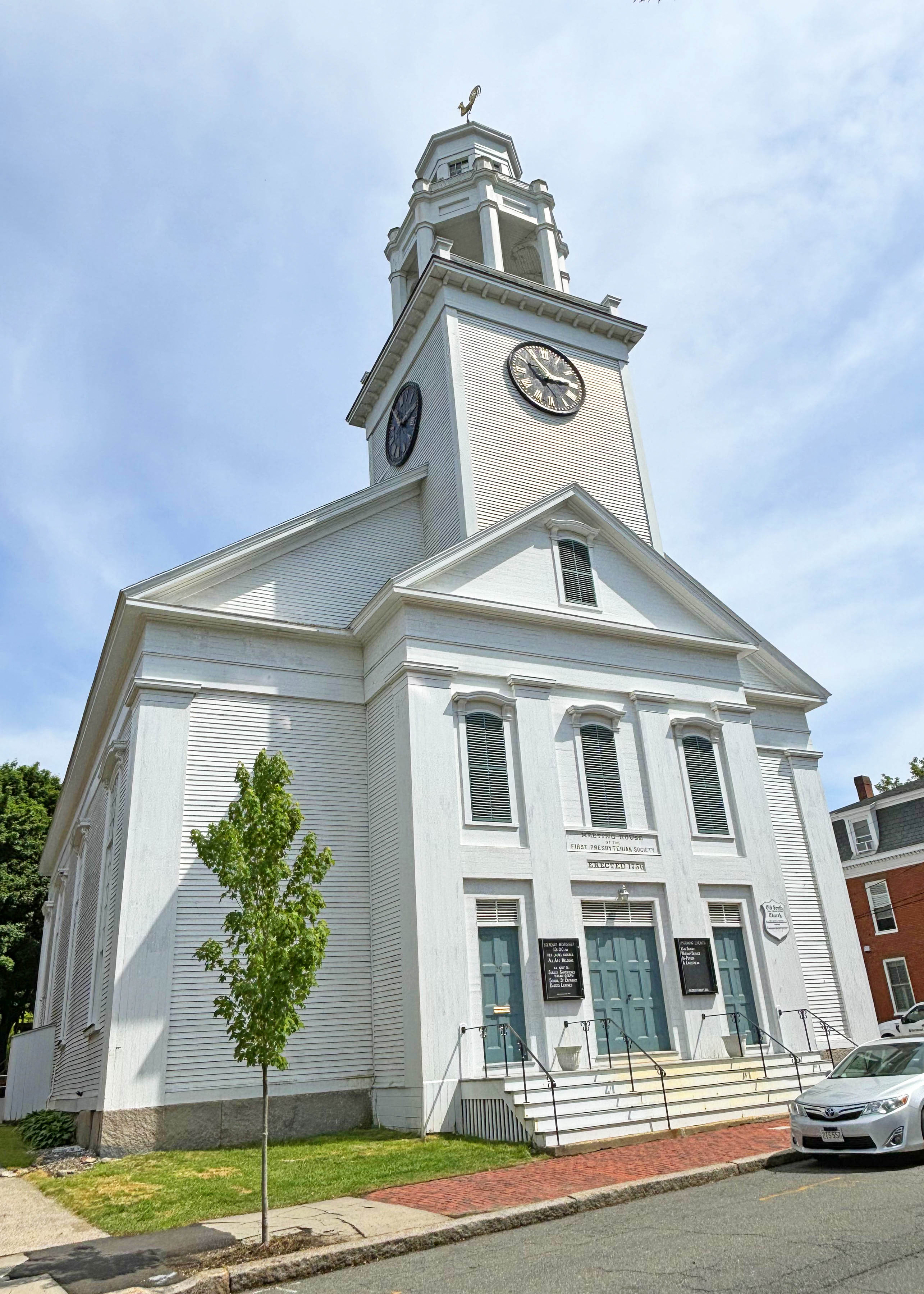
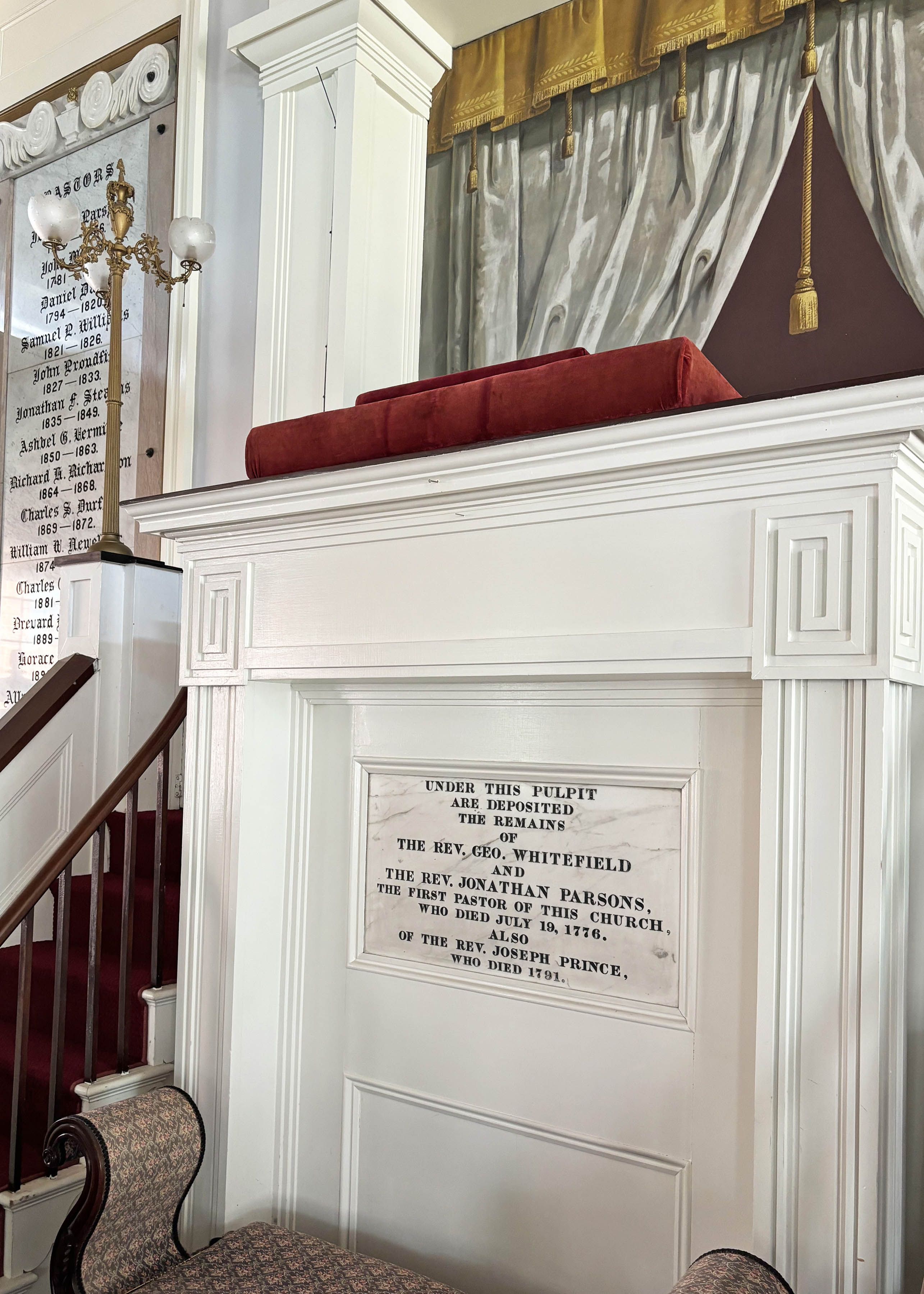
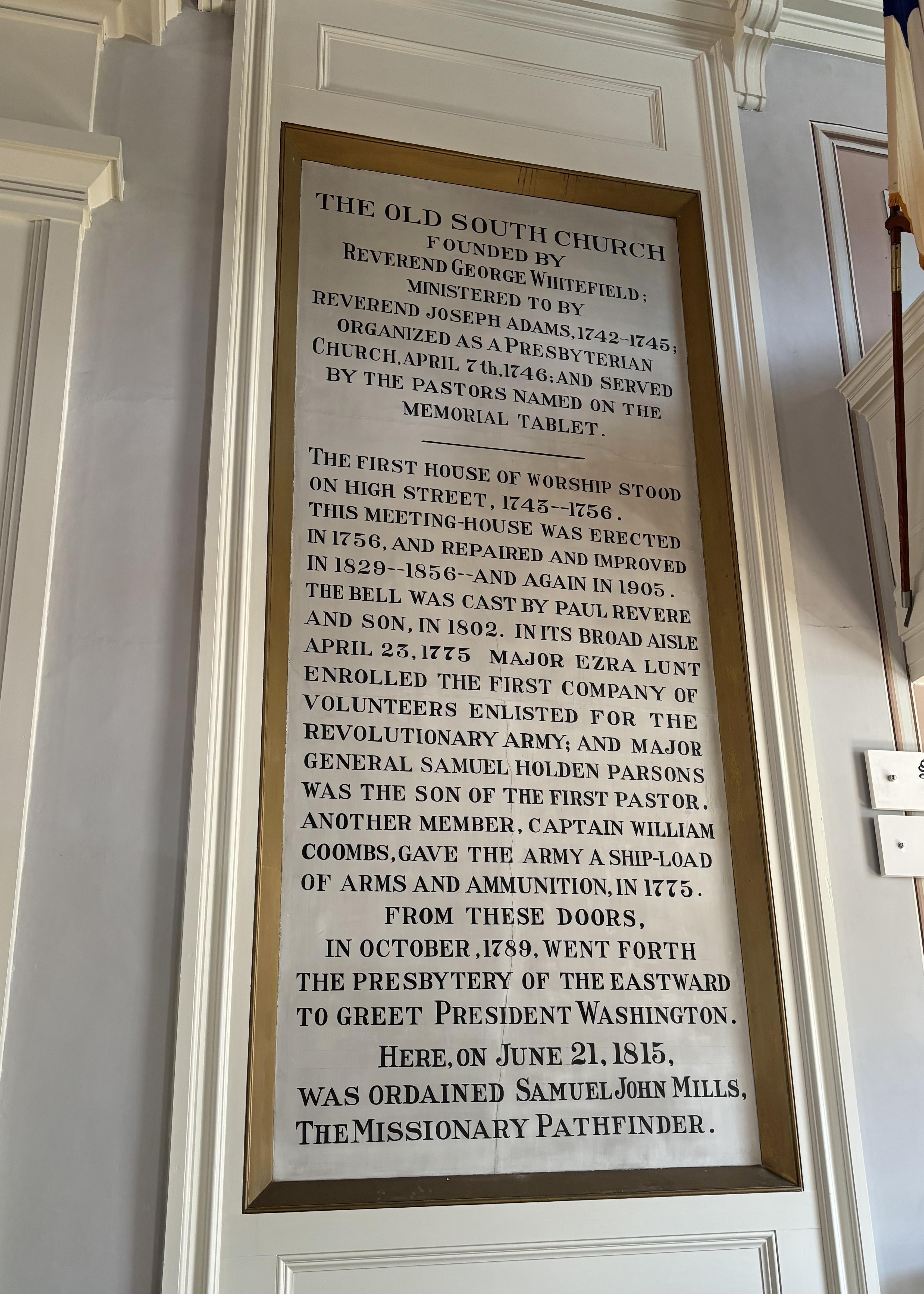
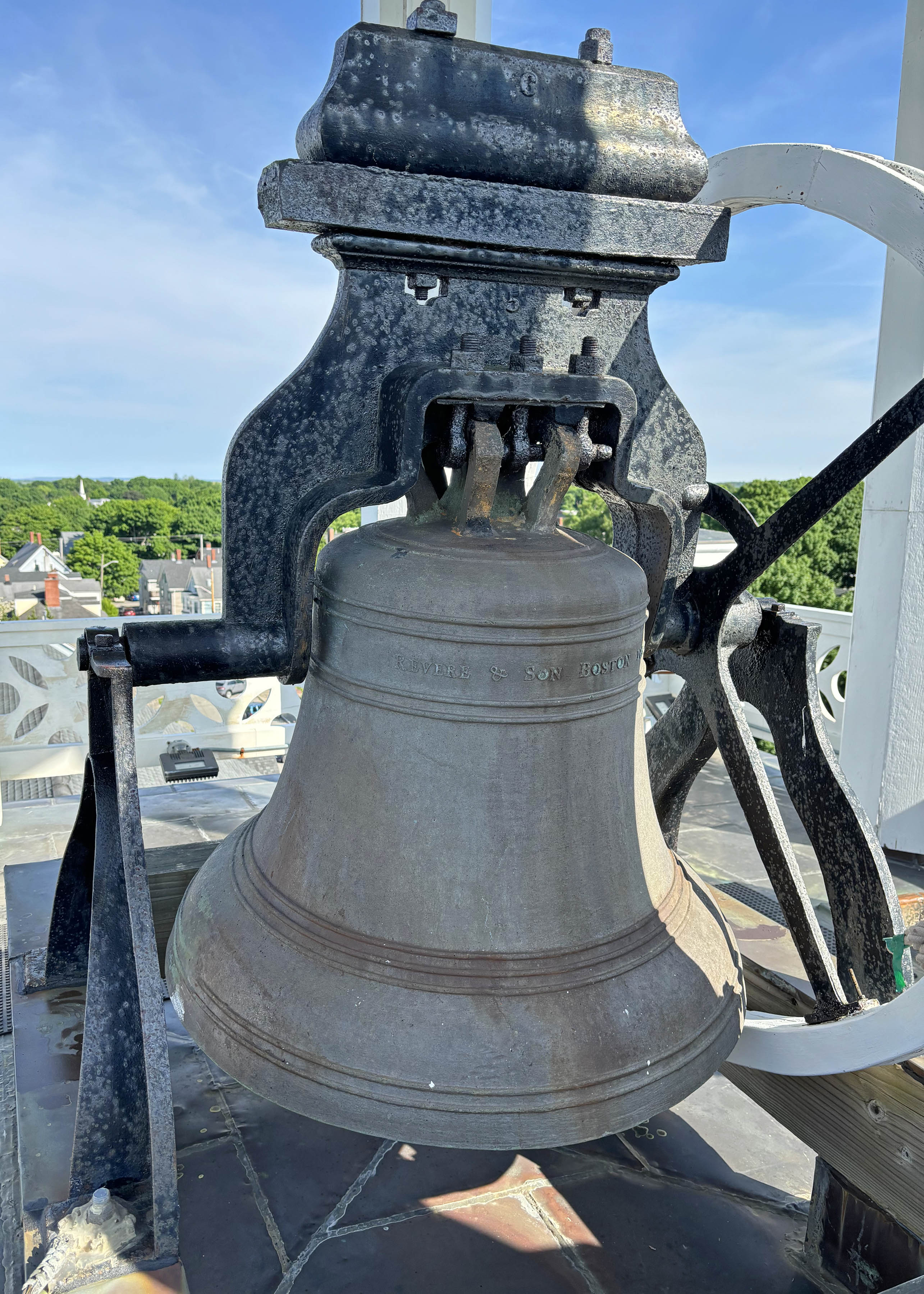
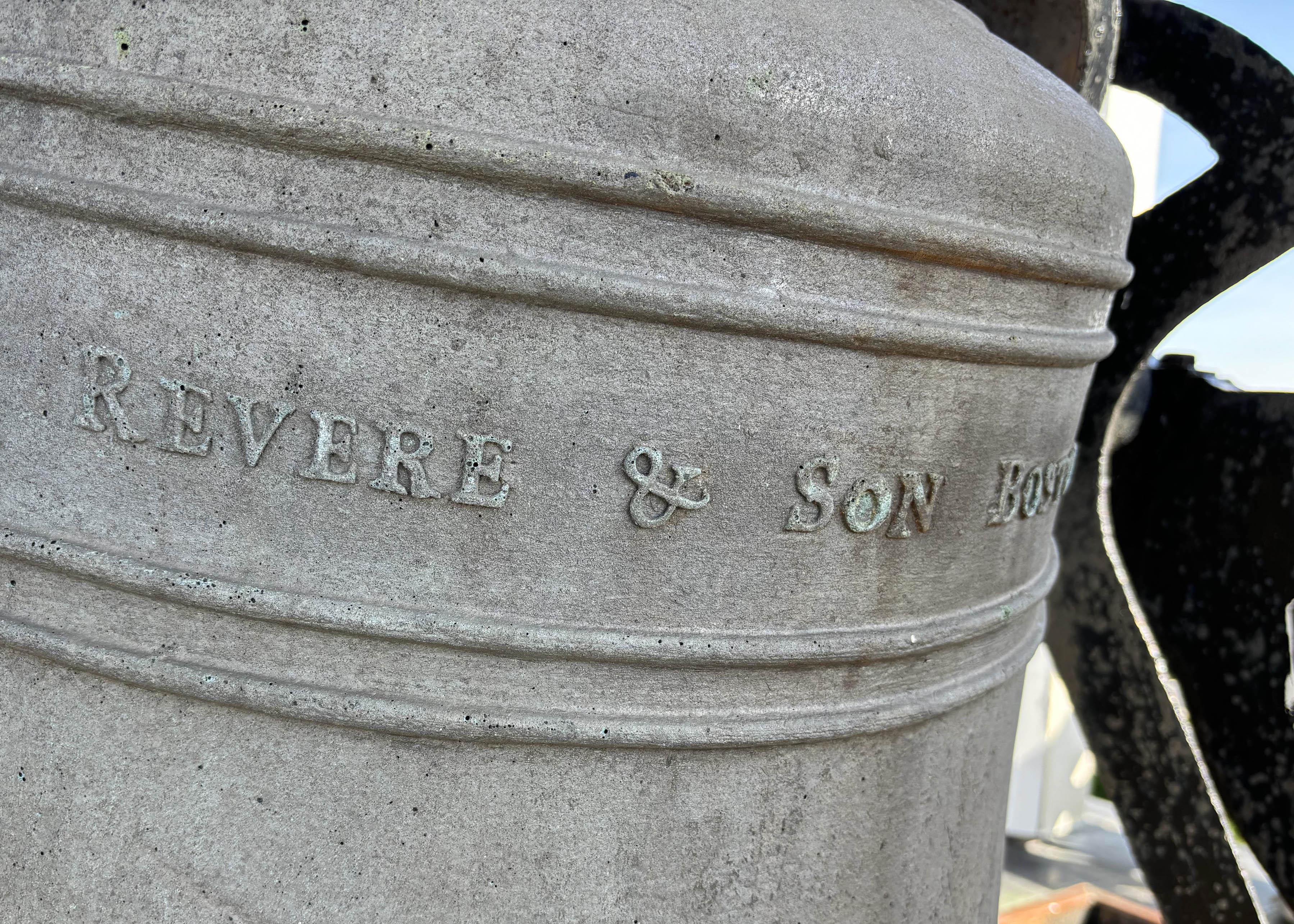
Our personal tour began 3:00pm sharp with a very engaging 45-minute lecture on the life of Whitefield and his involvement in the founding of this particular church. Following our history lesson our guide pointed out various interesting aspects of the building. Etched into a marble slab on the front wall of the inside of the church, to the right of the pulpit, we read, “The Old South Church was founded by George Whitefield; organized as a Presbyterian church on April 7, 1746. The first house of worship stood on High Street, 1743-1756. This meeting house was erected in 1756 and repaired and improved in 1829, 1856 and again in 1905. The bell was cast by Paul Revere and son, in 1802”.
A publication produced by the church in 2011 states that Whitefield founded the church and was buried beneath the pulpit, at his own request1:
“Thirty men with their families built a plain but ample chapel that was finished February 15, 1743, and served as our sanctuary for 13 years. The chapel was located on High Street (then Norfolk Street) between Lime and Federal Streets. It served as the [indoor] venue for Whitefield’s preaching whenever he was in Newburyport, and sometimes he had to preach outside the chapel due to the size of the crowd. During one of these occasions, someone lobbed a rock over the crowd and it nearly hit Whitefield and knocked the Bible from his hand. Never one to miss an opportunity, he responded with one of his most frequently quoted remarks: ‘I have a warrant from God to preach. His seal [and Whitefield held up the Bible] is in my hand, and I stand in the King’s highway.’
Through enormous efforts, a larger parcel of land on the corner of Federal and School Streets was purchased in 1756, and the members immediately began work to erect the Old South meetinghouse. Old South presently stands at 29 Federal Street, between Beck and School Street2.
Whitefield not only felt at home preaching at Old South; he also expressed the wish that he be buried under the pulpit of Old South. That wish was granted after his death early Sunday morning, September 30, 1770, thirty years to the day after first arriving in Newburyport. He died the day after field preaching to a throng in Exeter, New Hampshire.
In keeping with his request, Whitefield was buried under the Old South pulpit, located at that time on the north side of the sanctuary. He was honored with a massive funeral during which “harbor guns were fired, flags hung at half-mast, and thrice all the bells were tolled for half-an-hour.” His remains were moved into the crypt below the new pulpit on the east end during the major remodeling of 1829.
Also during the remodeling of 1829, a large cenotaph (defined as “a monument to someone who is buried elsewhere”) in memory of Whitefield was installed in the front left corner of the sanctuary. It is there today. The cenotaph was given by Newburyport resident and “wealthy local merchant” William Bartlet, designed by architect William Strickland, and constructed in Philadelphia. As a young man, Bartlet had heard Whitefield speak and was impressed with his eloquence. He was not a member of Old South, however, nor, it is reported, of any church. He became a prosperous, “public-spirited” businessman and “was deeply involved in evangelical education and reform.”
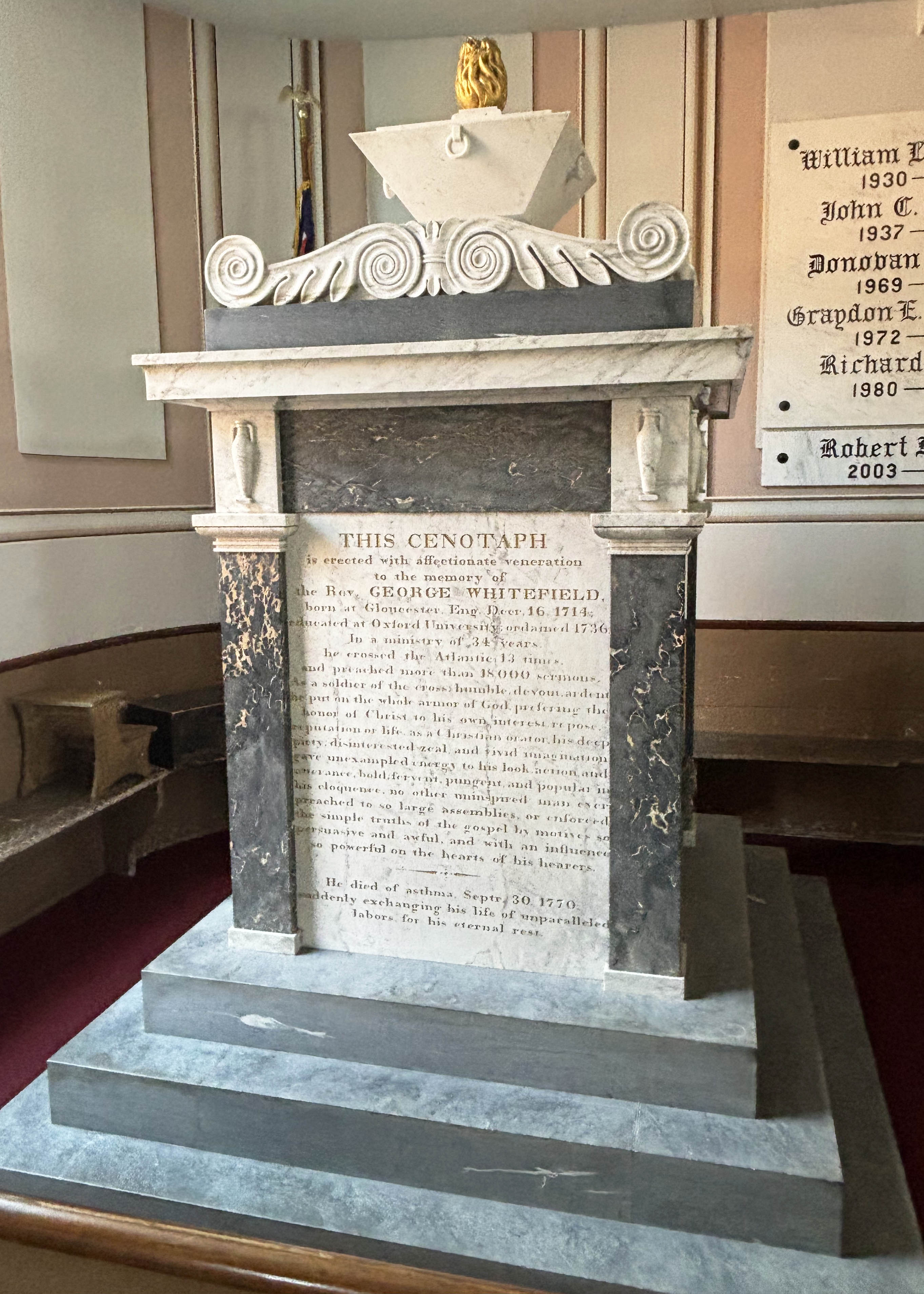
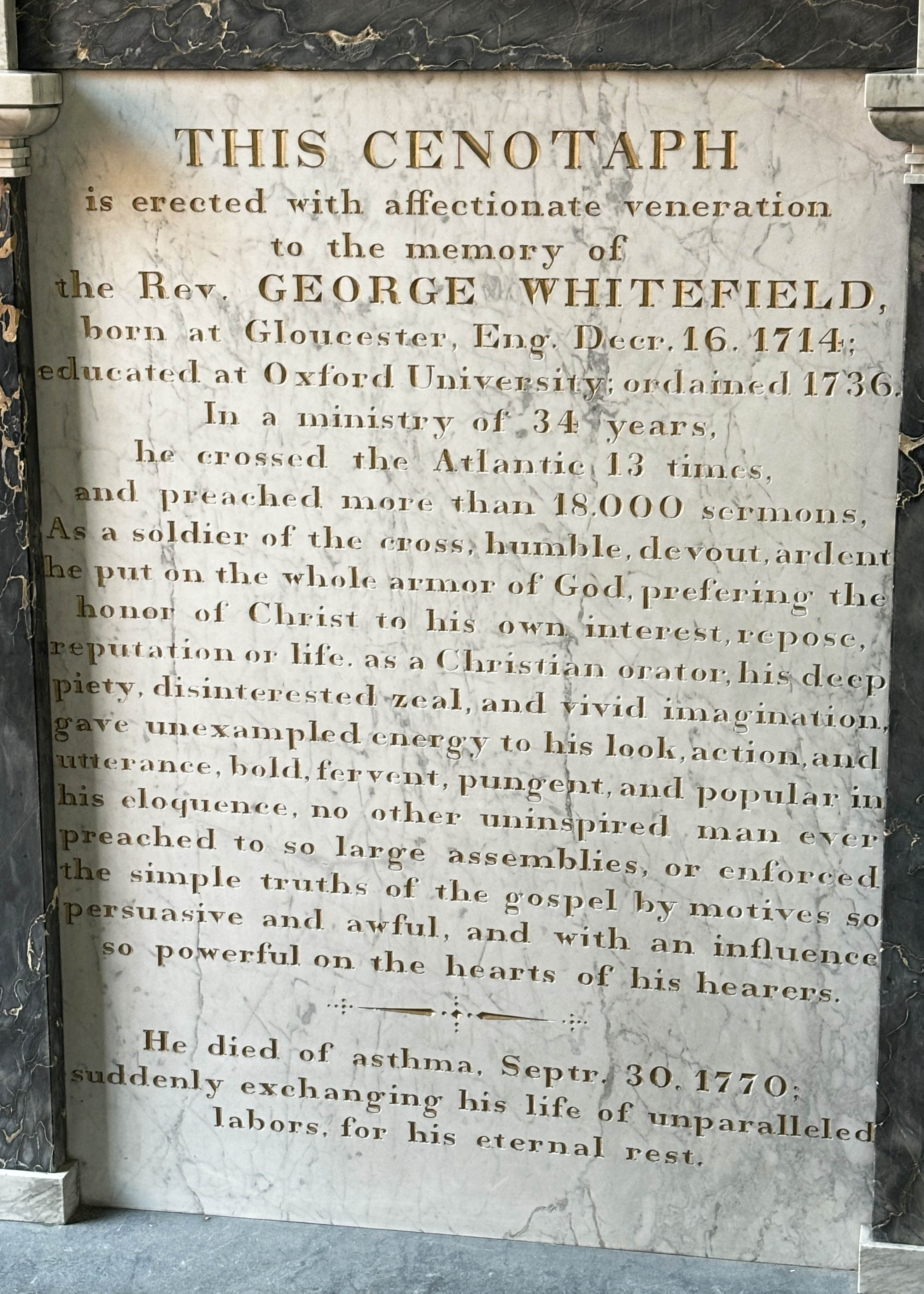
THIS CENOTAPH
is erected with affectionate veneration
to the memory of the Rev. GEORGE WHITEFIELD,
born at Gloucester, Eng. Decr. 16. 1714;
educated at Oxford University; ordained 1736
In a ministry of 34 years,
he crossed the Atlantic 13 times,
and preached more than 18,000 sermons,
As a soldier of the cross, humble, devout, ardent
he put on the whole armor of God, prefering the
honor of Christ to his own interest, repose,
reputation or life. as a Christian orator, his deep
piety, disinterested zeal, and vivid imagination,
gave unexampled energy to his look, action, and
utterance, bold, fervent, pungent, and popular in
his eloquence, no other uninspired man ever
preached to so large assemblies, or enforced
the simple truths of the gospel by motives so
persuasive and awful, and with an influence
so powerful on the hearts of his hearers.
He died of asthma, Septr, 30.1770;
suddenly exchanging his life of unparalleled
labors, for his eternal rest.
There are a few interesting items to see in the church: one of Whitefield’s portable pulpits, a wooden box that was used to return Whitefield’s arm bone which grave robbers had stolen, spittoons, circular cutouts under the pews for those who used to wear top hats and a deacons pole (with a feather on the end to tickle the ears of those who would dare fall asleep during church).
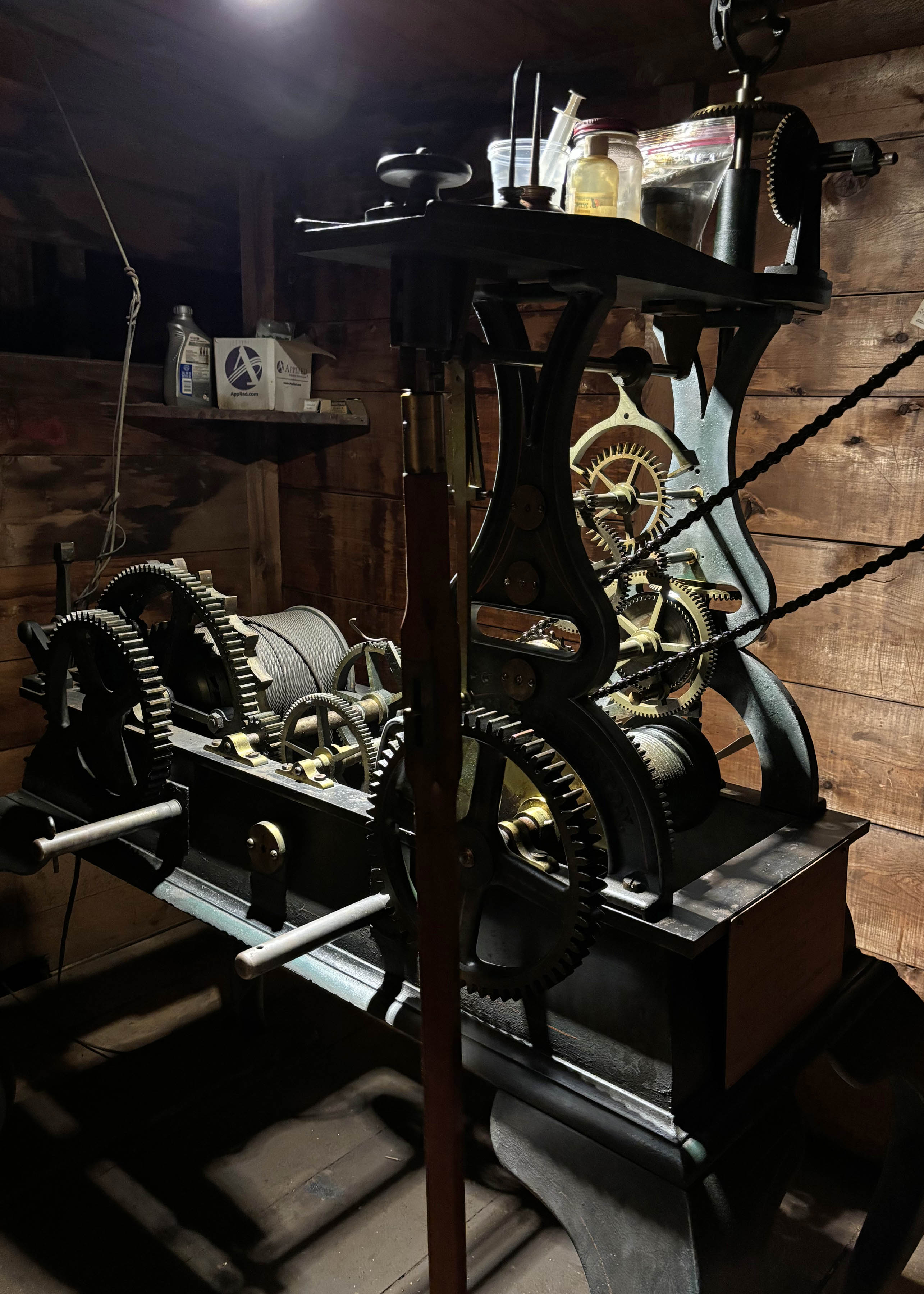
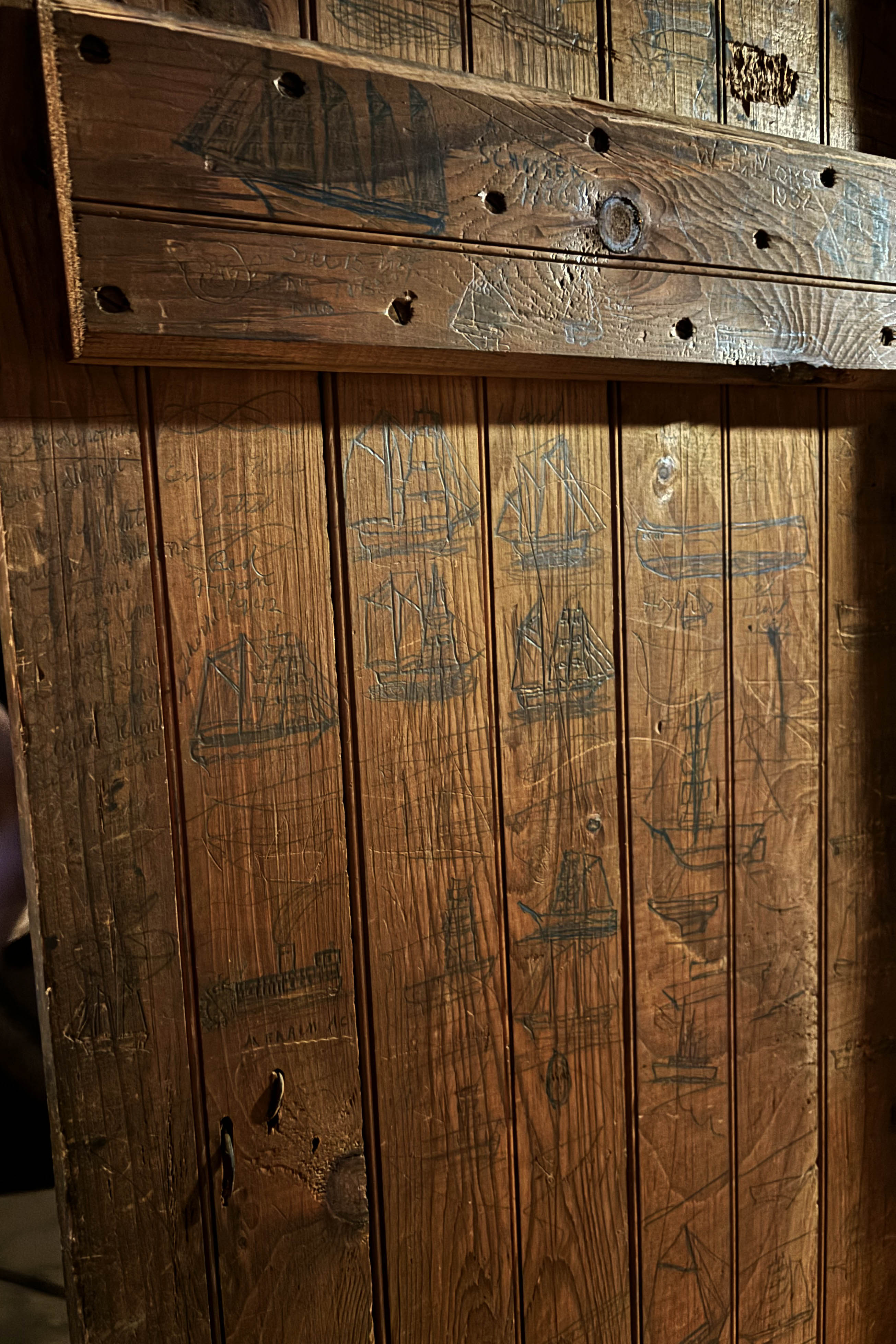
The vigorous climb up the rickety wooden steps of the clock and bell tower was worth every splinter from whatever handrails were available. The machinery that kept the hands on the clock moving was fascinating to see, complete with years of hand-drawn ships on the wooden doorway. Above the clock room was a very small hatch we had to wiggle through to get to the Paul Revere bell, which still rings today!
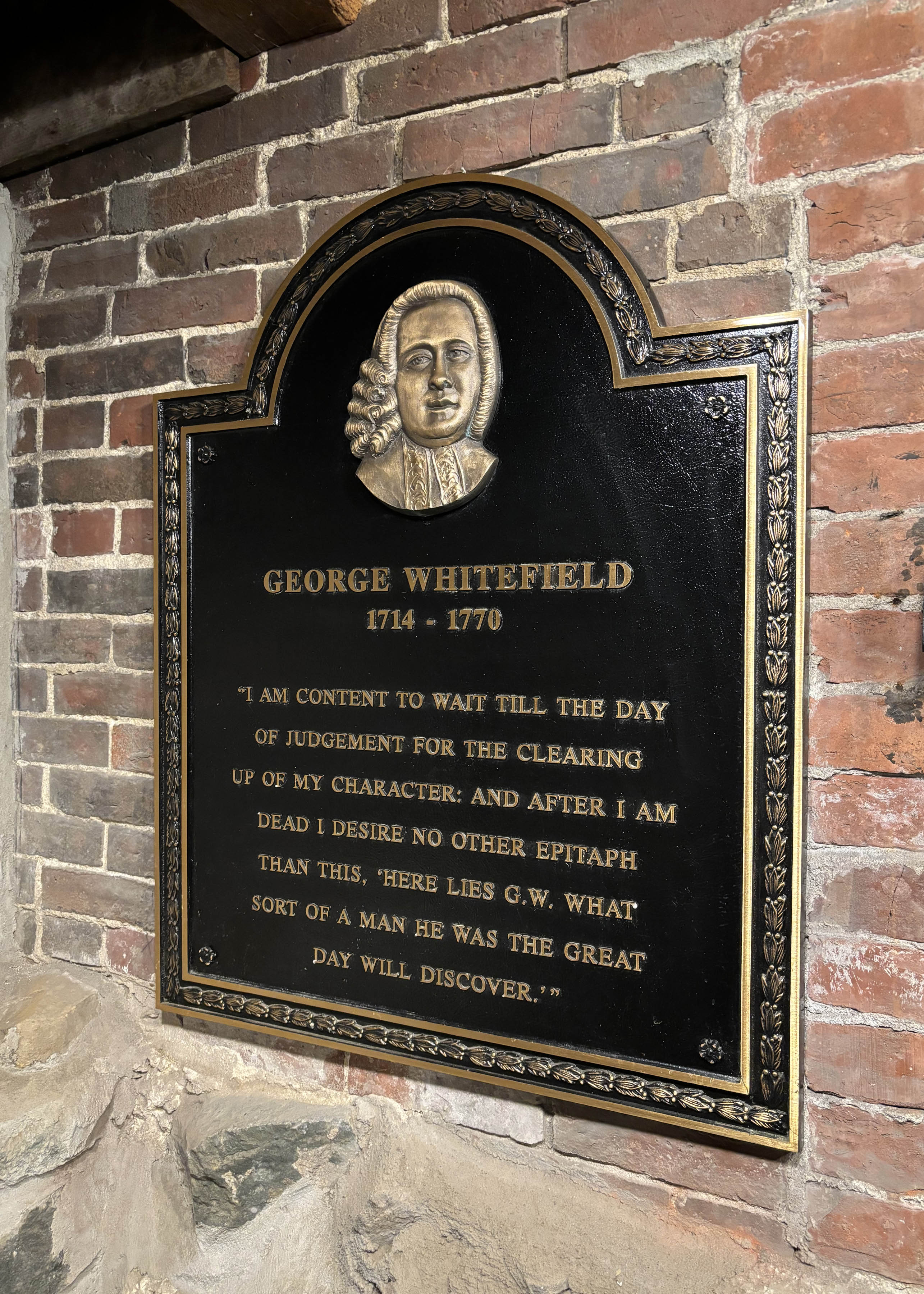
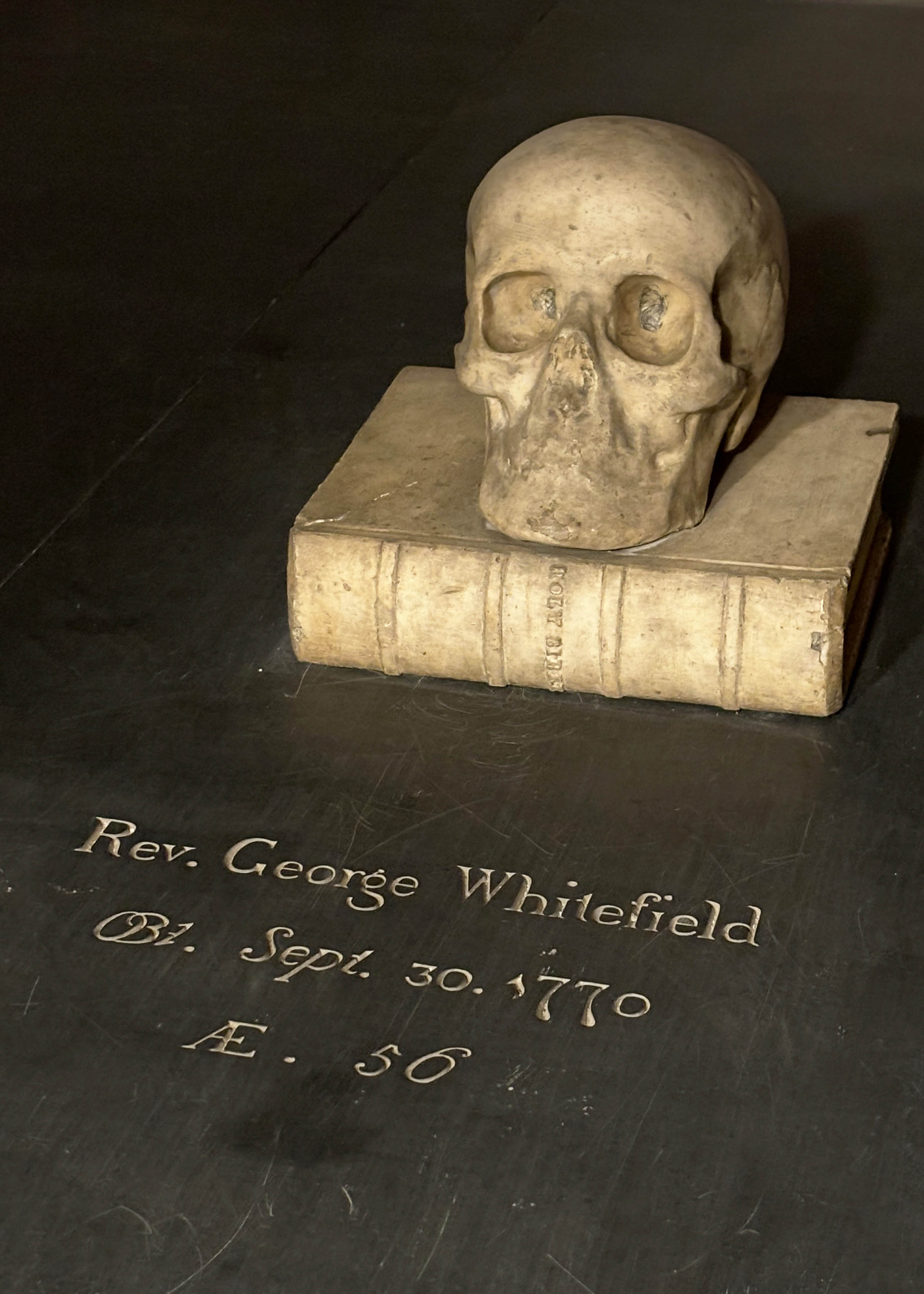
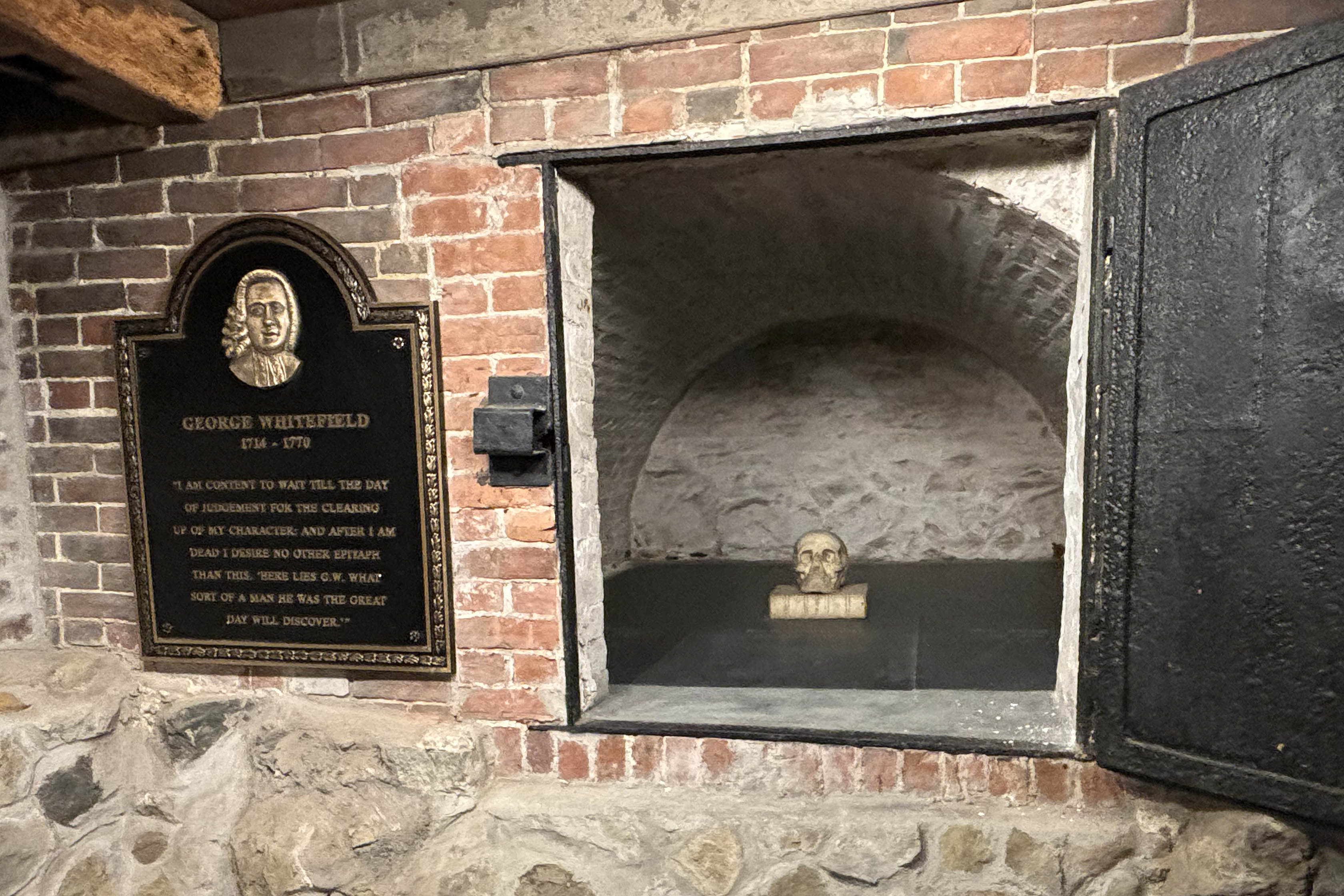
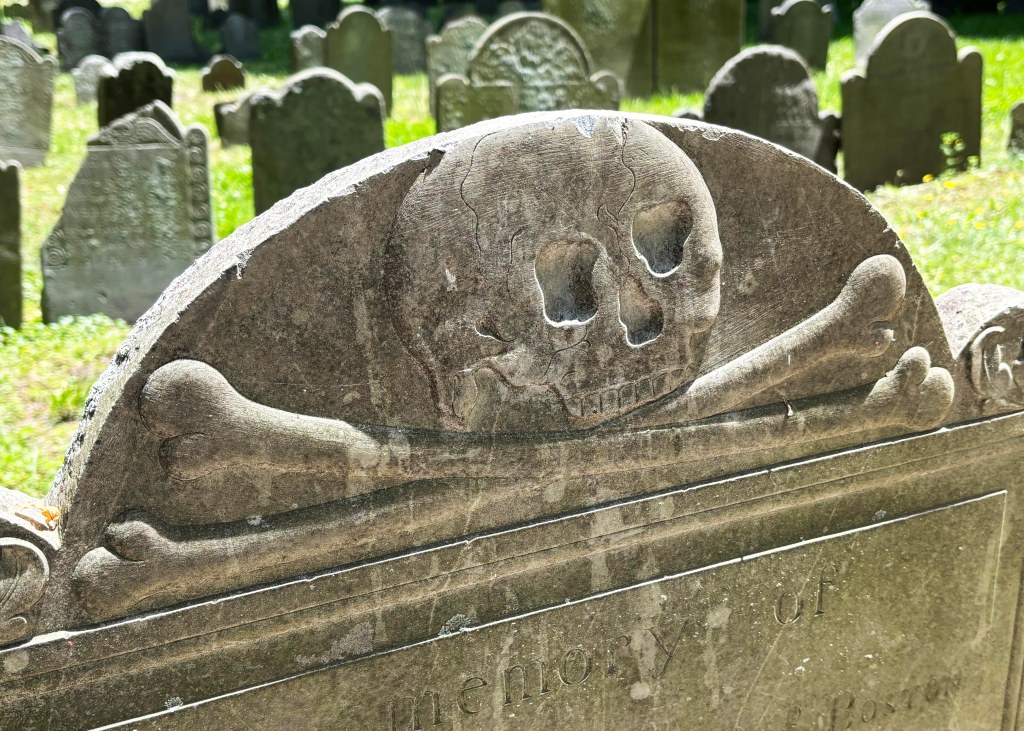
We concluded our tour by a careful descent back to the main floor and then we went down further to see the crypt of George Whitefield. The Bible is a cast of the Geneva Bible that he used to preach from. The skull is one of two casts made of Whitefield to study the anatomic structure in hopes of discovering what made his voice project so well when he spoke to thousands of people. I thought the skull was an odd thing to put on the top of the tomb, but something that I saw earlier in the day in Boston may explain why it is there. We visited the graveyard where Paul Revere is buried, and most of the tombstones there have a skull and crossbones on them because 16th century Puritans wanted to send a solemn message to all who passed by that they must contemplate their own mortality and that life on earth is fleeting. Along with the skull and crossbones, the Latin phrase ‘memento mori’ was sometimes carved in the stone, meaning “remember death” or “remember that you must die”.
Knowing that people everywhere were facing death without Christ was the reason George Whitefield was so passionate about proclaiming the gospel. Getting the message of the Bible to the masses was the motivating force behind all that Whitefield did. The only thing that could stop him from preaching the good news of forgiveness in Jesus Christ was his own mortality. He passed away on September 30, 1770 and came face to face with the beautiful Savior he had preached about all those years.
We did not attend a service at the church, so I cannot make a statement on the state of the current church or their doctrinal beliefs. I do strongly recommend the tour though!
- The Life and Ministry of The Rev. George Whitefield: The Inspiration Behind Old South, First Presbyterian Church and a Force Behind the First Great Awakening, Stewart L. Stokes for the Historical Committee of Old South First Presbyterian Church Newburyport, Massachusetts, 2011 ↩︎
- https://www.oldsouthnbpt.org/History-Founding ↩︎
Permissions: You have permission to reproduce and distribute this material in its entirety or in unaltered excerpts, as long as you do not charge a fee. For Internet posting, you must provide a hyperlink to this page.
All photographs on this site are copyrighted. Downloading photographs from any page on this site is prohibited without permission. For any permissions or copyright questions, or to purchase high-resolution images, please use the contact page for more information.



 Establish my footsteps in Your Word ~ Psalm 119:133