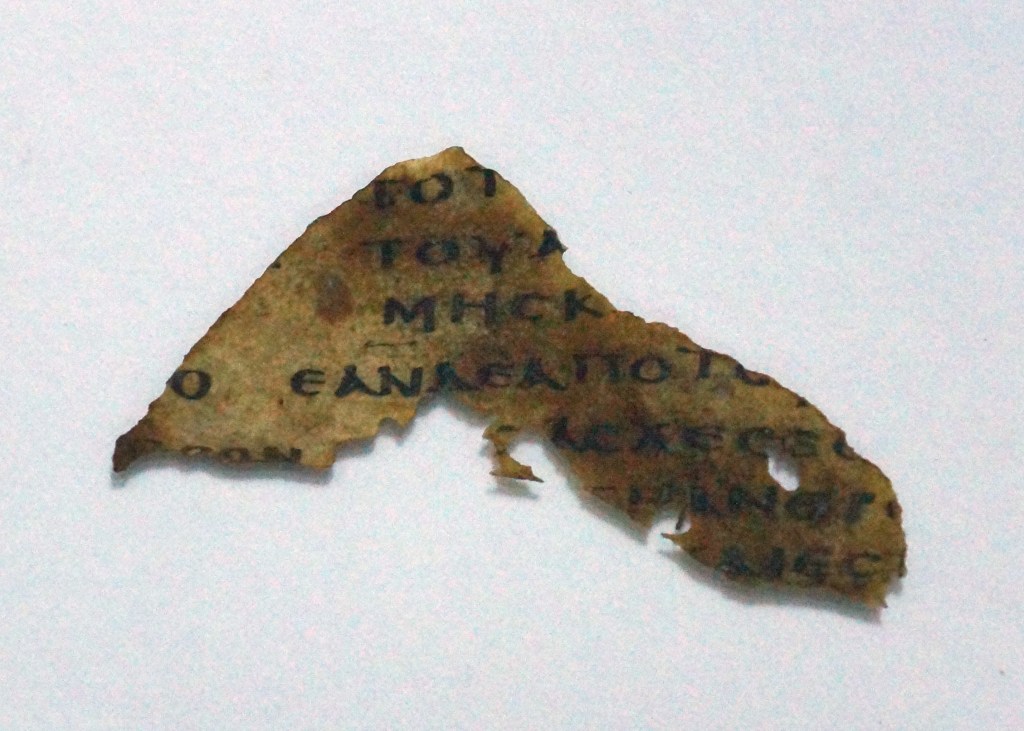
This is one of thousands of small fragments of the Bible that was unearthed in Egypt over a hundred years ago. I took this photo at The Museum of the Bible exhibit at the Biblical Life Institute in Sarver, Pennsylvania. According to the museum’s website, this small fragment of parchment contains parts of Leviticus 27:12,15-16 on the front, and Leviticus 27:19-20, 24 on the reverse. It was from a codex that likely contained all of Leviticus, written in Biblical uncial.
Where Did This Bible Artifact Come From?
Between 1897 and 1907 Bernard P. Grenfell and Arthur S. Hunt conducted excavations outside the ruins of the ancient city of Oxyrhynchus (the modern-day city of El-Bahnasa). It is located about 100 miles south of the city of Cairo and ten miles west of the Nile River. Their discoveries were nothing short of astonishing! During these years, they dug up almost a half million papyri fragments at an ancient refuse dump, which included letters, political documents, financial records, horoscopes and other interesting items. Some of the papyri fragments were the size of a postage stamp, while others were several feet in length.
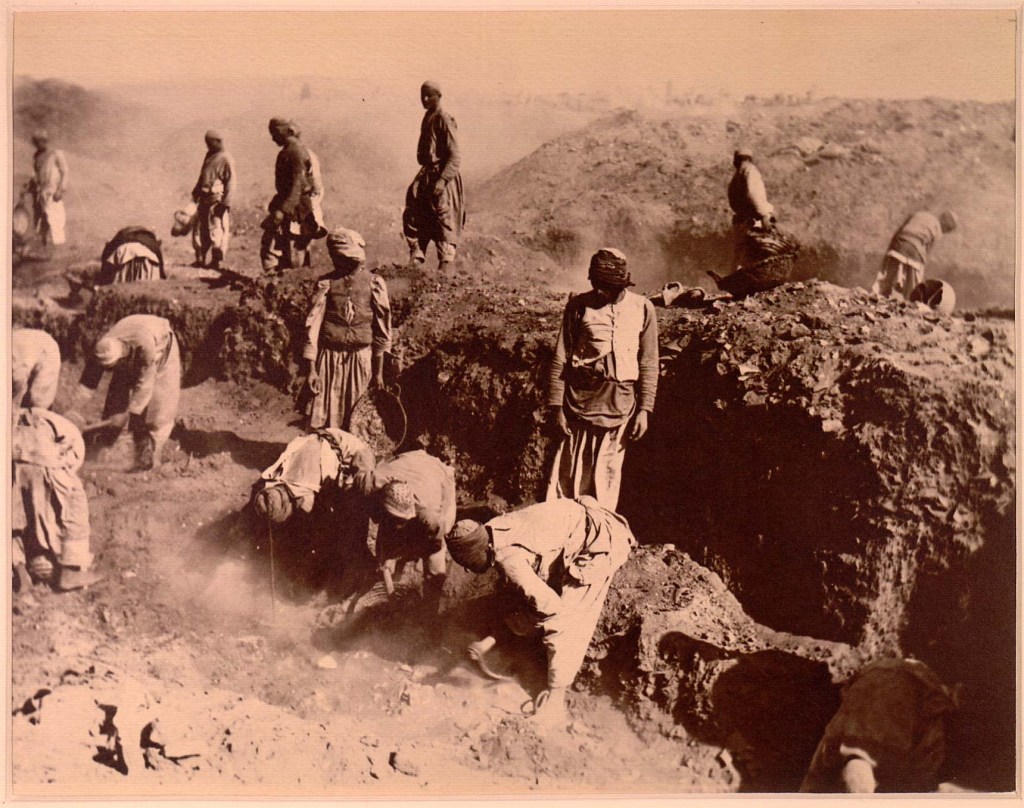
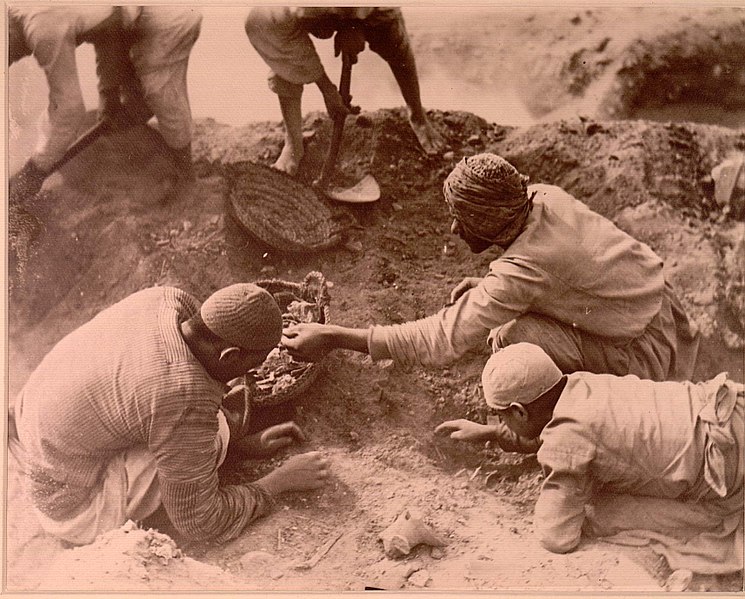
In Grenfell and Hunt’s book, The Oxyrhynchus Papyri, it states that ‘this small fragment comes from a vellum leaf which contained double columns… inscribed with upright uncials of medium size and the regular Biblical type; though somewhat heavy , they are well formed and probably not later than the fourth century’.
These discarded manuscript fragments have turned out to be some of the most important discoveries in history.
Why Are These Fragment Discoveries So Important?
So far, there are 127 registered New Testament papyri. Fifty-three of them are from the excavations at Oxyrhynchus (42%). From this discovery, there are thirteen papyri portions of the Gospel of Matthew, fourteen from John and four of Acts and Romans. Parts of other New Testament books are represented as well: Luke, 1 and 2 Corinthians, Galatians, Philippians, 1 and 2 Thessalonians, 1 Peter, 1 John and Jude.
The Old Testament was translated into Greek between the third and first centuries BC (this translation is referred to as the Septuagint. Many portions of the Septuagint were also found during this excavation activity: many passages from Genesis; Exodus 31-32; Joshua 4-5; Psalms 1, 7, 8, 68, 70, 75, 82, 83, 84; Ecclesiastes 6-7; Esther 6-7, and many others, including this piece from Leviticus.
The role that these fragments have in demonstrating how God preserves His Word cannot be overstated.
Through divinely appointed men, God chose to communicate to His people by the use of the written word. We know this from what we read in 2 Timothy 3:16 and 2 Peter 1:20-21. The only way to mass produce copies of these texts in the early days of Christianity was for scribes to meticulously hand copy the documents. The advent of the printing press obviously made this process much easier, but until then, there was heavy reliance on scribal accuracy for the reliability of the texts. Given the number of fragments found in this and other similar discoveries of ancient biblical writings, there is surprising agreement when comparing the samples. And when we compare our English translations to the samples we have in Greek, we gain confidence that what we’re reading is extremely accurate.
To have the collection of New Testament books that we have today is a testimony to how the record of God’s very words has persisted throughout the centuries. Even when documents like these ended up in a garbage dump in an ancient Egyptian civilization, God’s Word is not bound. It hasn’t been destroyed and it isn’t lost. It continues to survive and thrive – an undeniable testimony to the providence of God.
Sources
Bernard P. Grenfell and Arthur S. Hunt, eds., “1351. Leviticus xxvii,” in The Oxyrhynchus Papyri (London: Egypt Exploration Society, 1915), 11:1–2.
Lincoln H. Blumell and Thomas A. Wayment, Christian Oxyrhynchus Texts, Documents, and Sources (Baylor University Press, 2015).
Fragment photograph credit: Mark Ort.
Excavation photographs: Public domain.




 Establish my footsteps in Your Word ~ Psalm 119:133